How Do Deer Stay Warm in the Winter? 6 Fascinating Adaptations & Behaviors
When the snow starts to fall and the temperature drops below freezing, many animals migrate or hibernate to survive the cold. But what about deer? They don’t fly south, and they don’t sleep through the winter. So, how do deer stay warm in the winter when food is scarce and snow covers the ground?
Deer have developed remarkable survival adaptations that allow them to withstand freezing temperatures, conserve energy, and thrive through harsh winters. From their fur to their feeding habits, every behavior plays a critical role in their survival.
In this article, we’ll explore six fascinating ways deer adapt and stay warm in the winter, along with what these behaviors can teach us about resilience and balance in nature.
1. A Winter Coat Built for Survival
One of the most noticeable adaptations deer have for winter is their two-layer coat.
In late fall, deer shed their lightweight summer fur and grow a dense, grayish-brown winter coat that acts as natural insulation.
Here’s how their coat keeps them warm:
- Hollow guard hairs trap air, creating an insulating barrier that prevents heat loss.
- A thick undercoat of fine fur provides additional warmth.
- The darker winter color absorbs sunlight more effectively, helping to capture extra heat.
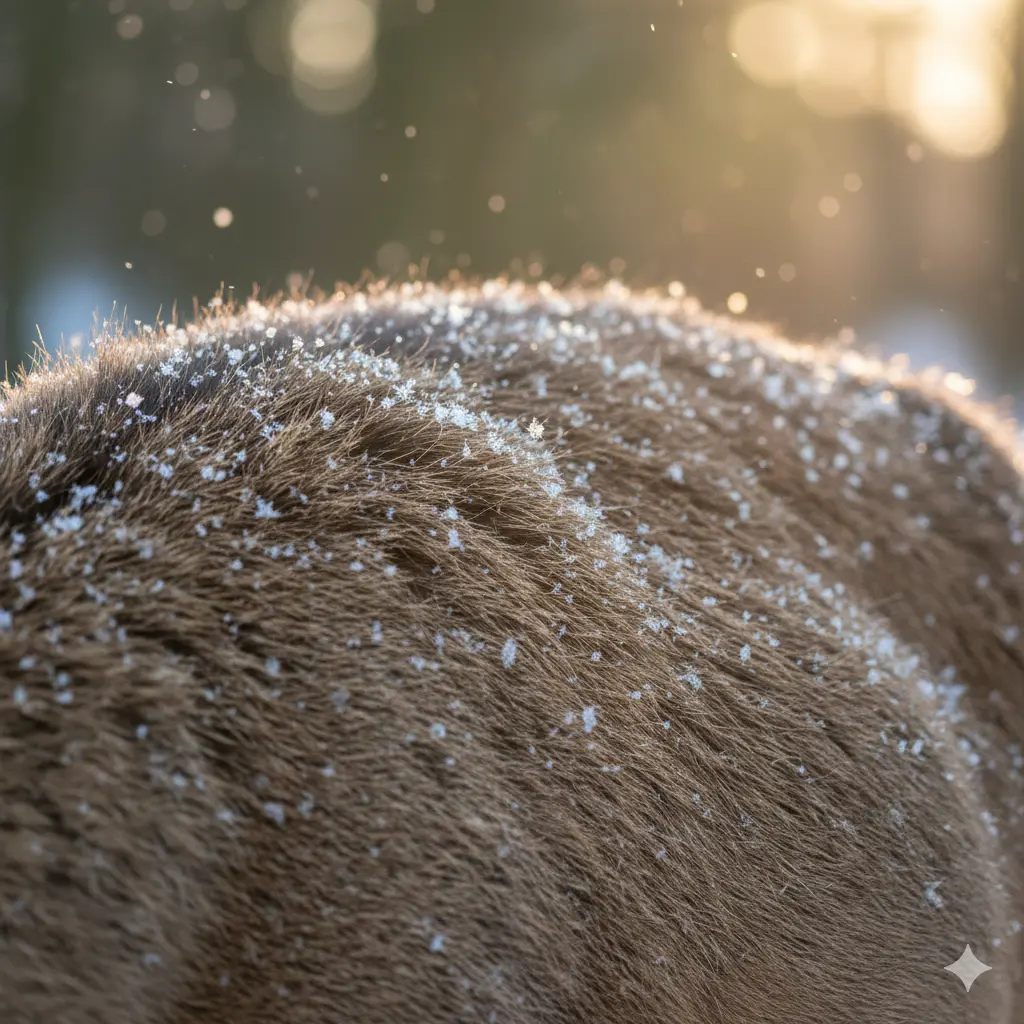
Even when covered in frost or snow, this coat remains warm and dry underneath — a perfect example of nature’s engineering.
2. Fat Reserves: Nature’s Built-in Furnace
Deer begin preparing for winter months in advance. During late summer and fall, they consume high-calorie foods like acorns, corn, and other mast crops to build up fat reserves.
This fat layer serves two key purposes:
- Energy Source: Fat provides fuel when food is limited in winter.
- Insulation: The subcutaneous fat layer helps minimize heat loss.
An adult deer can lose up to 20% of its body weight during a long, harsh winter — proof of how critical these fat reserves are for survival.
3. Slowing Down the Metabolism
When food becomes scarce, deer don’t panic — they slow down their metabolism.
This biological adjustment reduces their heart rate, breathing, and energy use, allowing them to survive longer on limited resources.
For example:
- A resting deer’s heart rate can drop from about 65 beats per minute in summer to as low as 40 bpm in winter.
- They become less active, often moving only short distances to conserve energy.
This metabolic slowdown is like a mild, standing version of hibernation — an incredible adaptation that keeps them alive through bitter cold.
4. Finding Shelter: Thermal Cover and Bedding Areas
Deer are experts at using the landscape to their advantage. In winter, they seek thermal cover — areas that offer protection from wind, snow, and predators.
Common shelter types include:
- Evergreen forests (pines, cedars, spruces): Thick canopies block wind and trap heat.
- South-facing slopes: These spots receive more sunlight, staying slightly warmer.
- Low-lying thickets or brush piles: Offer wind protection and concealment.
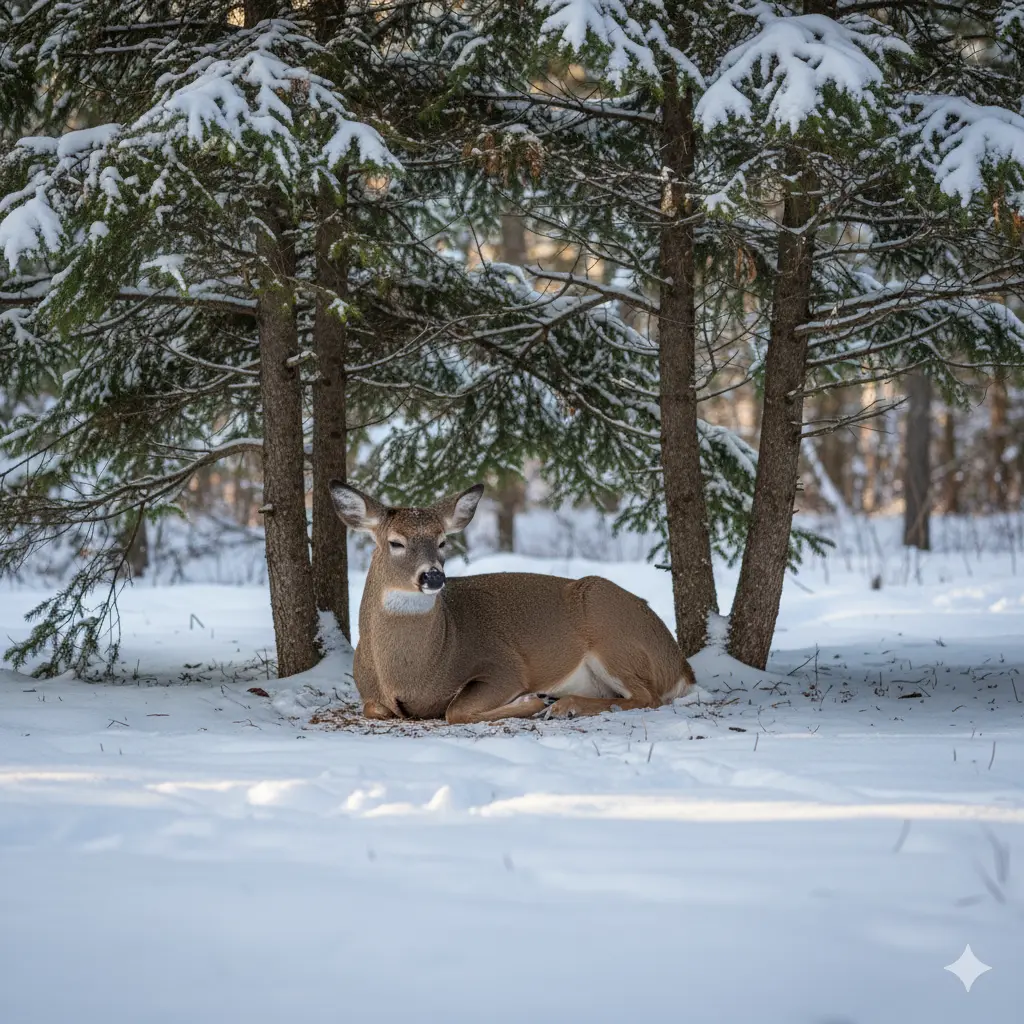
They also create bedding areas where they rest in shallow depressions in the snow, insulated by body heat and trapped air beneath them. These shelters are vital for conserving warmth during blizzards or cold nights.
5. Grouping Together for Warmth and Safety
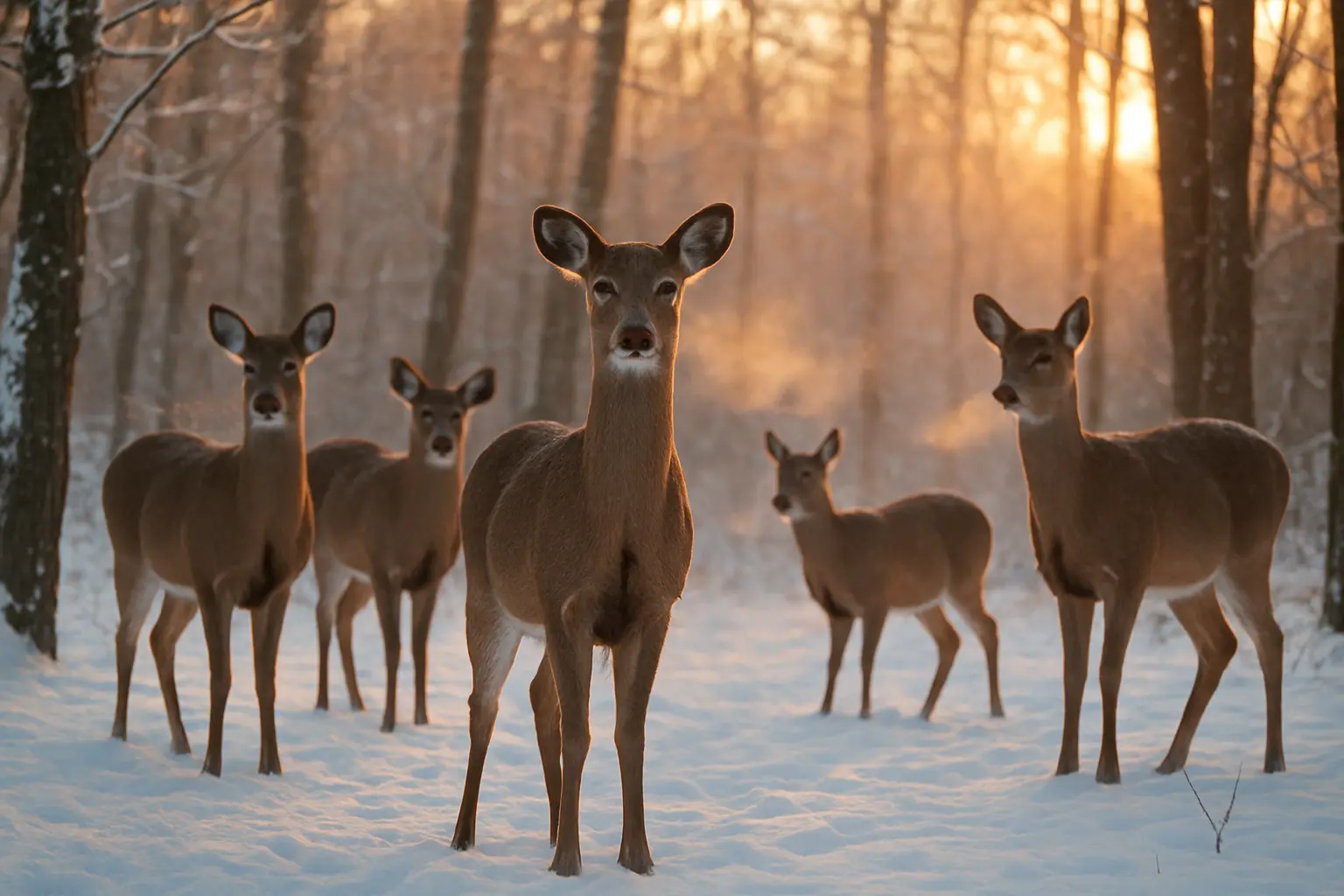
Deer are social animals, and in winter, they often form small herds or “yards.”
This behavior offers multiple benefits:
- Shared warmth: Grouping together helps reduce exposure to wind and retain heat.
- Packed snow paths: Multiple deer using the same trails conserve energy by reducing the effort needed to move through deep snow.
- Predator awareness: More eyes mean better chances of spotting danger early.
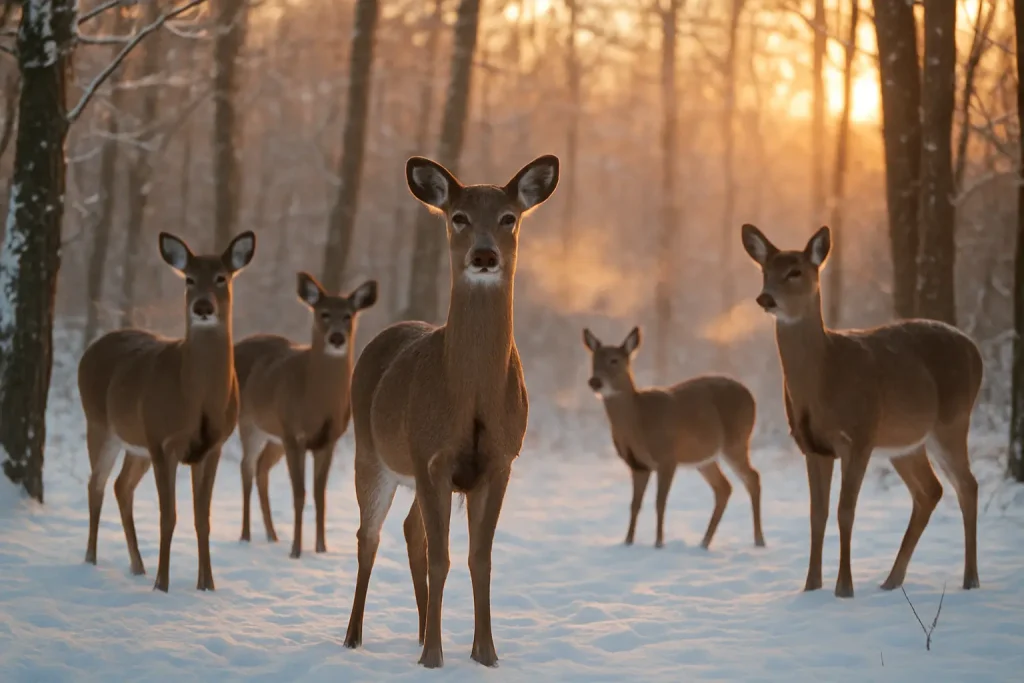
Deer yards are usually located in sheltered areas with nearby food sources — often a mix of conifers and hardwoods.
6. Adjusting Their Diet for Winter Conditions
In winter, food options become limited, forcing deer to adapt their diet.
They switch from green vegetation to woody browse, such as:
- Twigs, buds, and bark from maple, oak, or birch trees
- Evergreen needles and shrubs
- Dried grasses and leftover agricultural crops
While these foods are less nutritious, deer’s four-chambered stomach allows them to extract maximum nutrients from rough forage.
By eating smaller but more frequent meals, they maintain enough energy to keep warm and active.
Bonus Insight: What Happens in Extreme Winters?
In especially cold or snowy seasons, deer survival rates can drop. Deep snow limits their movement, and long-lasting cold spells can deplete fat reserves.
However, deer populations are resilient, and nature balances this cycle through natural selection. The strongest and most adaptable individuals survive and pass on their traits to future generations.
How Humans Can Help Deer in Winter
While deer are built to endure harsh weather, human activity can make survival harder — especially through habitat loss and traffic hazards.
You can help local deer by:
- Leaving natural shelter areas intact (don’t clear all brush or evergreens)
- Avoiding feeding deer artificially, which disrupts their natural behavior
- Driving carefully in rural areas, especially at dawn and dusk
Respecting their natural adaptations ensures that deer populations stay healthy and sustainable.
Conclusion: The Quiet Strength of Deer in Winter
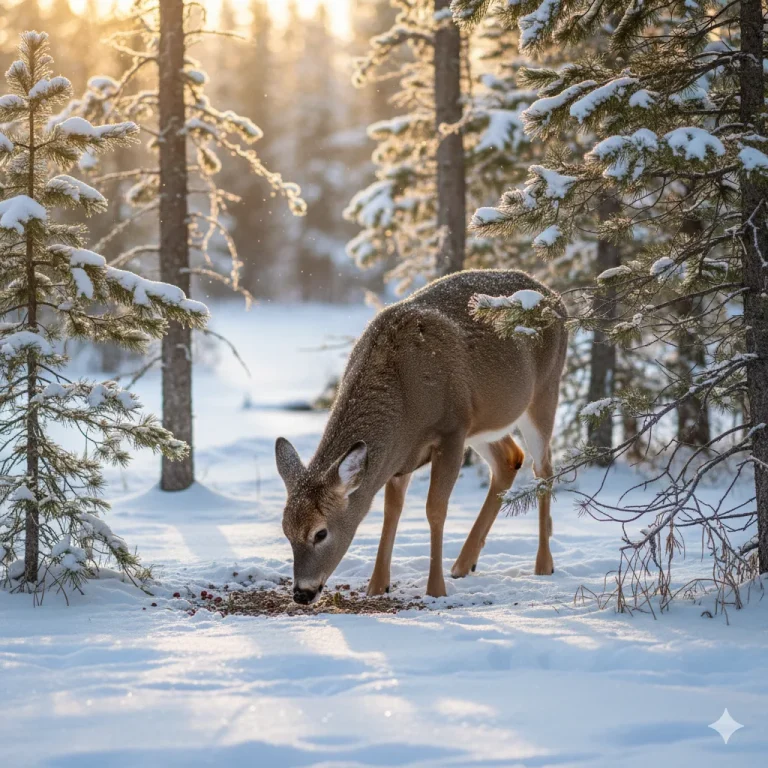
So, how do deer stay warm in the winter? Through a mix of biological brilliance and behavioral adaptation — thick coats, stored fat, slowed metabolism, and a keen sense of shelter.
Watching deer endure freezing conditions reminds us that survival often depends on balance, patience, and preparation. The next time you see a deer standing calmly in a snowy forest, remember — it’s not just surviving winter, it’s mastering it.