What Do Deer Eat in the Winter? Essential Feeding Rules in the USA & Canada
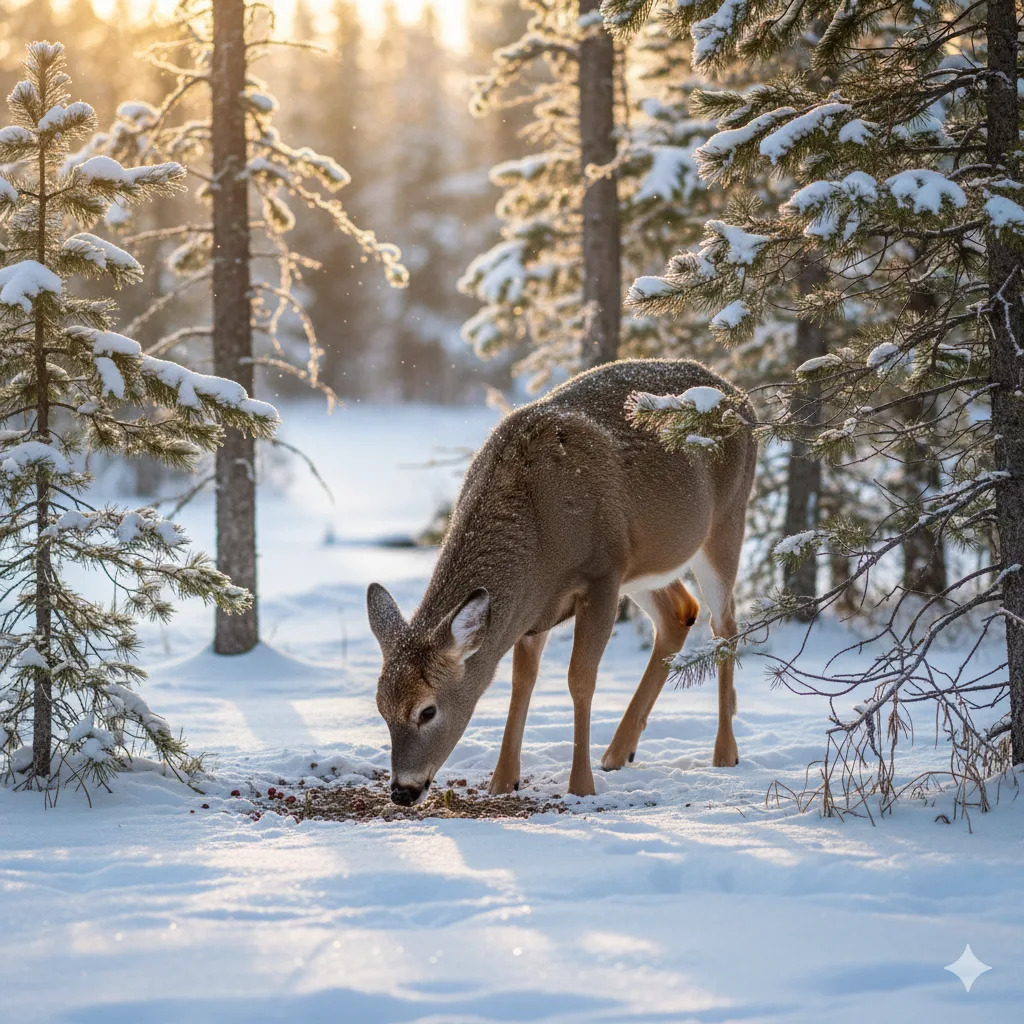
When winter blankets the landscape in snow and frost, life becomes a challenge for wildlife — especially for deer. As lush vegetation disappears and temperatures plummet, many people wonder: What do deer eat in the winter?
These graceful animals are masters of adaptation, shifting their diet and behavior to survive months of limited food. However, not everything that seems like “help” from humans — such as feeding them corn or bread — is actually safe.
In this guide, we’ll explore what deer really eat in winter, how their feeding habits change, and the legal and ethical feeding rules across the USA and Canada.
1. Understanding Deer Nutrition in Winter
Deer are herbivores with highly adaptable digestive systems, but their stomachs are designed to handle natural vegetation — not processed or artificial food.
During warmer months, deer enjoy green plants, fruits, and crops. But in winter, their dietary options shift dramatically due to snow cover and plant dormancy.
Their winter nutrition focuses on:
- Woody browse: Twigs, buds, and stems from shrubs and trees
- Evergreen needles: From cedar, hemlock, and pine
- Leftover crops: Such as corn stalks, soybeans, and alfalfa
- Dried grasses and acorns: When available under snow
Their metabolism also slows down, helping them conserve energy and survive on fewer calories.
2. The Main Foods Deer Eat in the Winter
Let’s break down the key winter food sources that sustain deer across North America:
A. Woody Browse
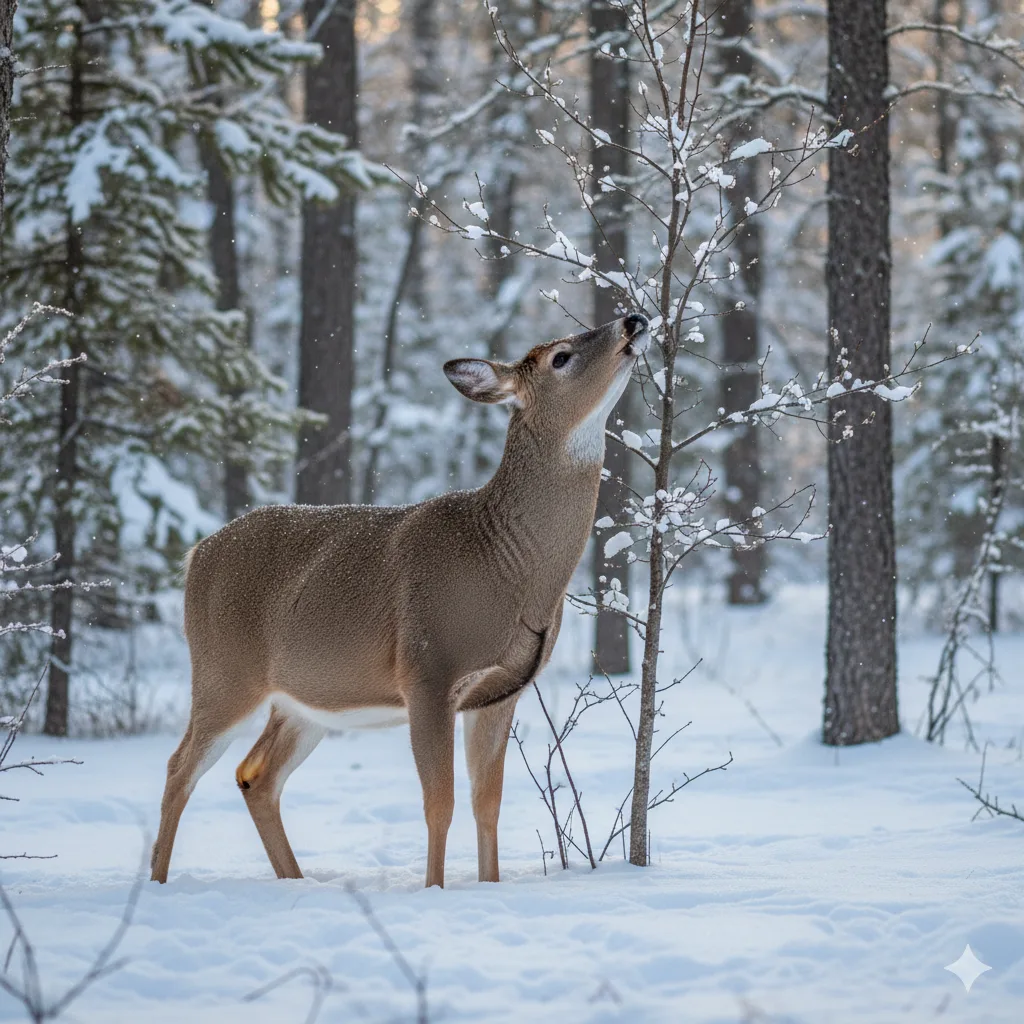
Deer rely heavily on woody plants — the tender tips of branches and buds that remain above the snow.
Common sources include:
- Maple
- Oak
- Birch
- Aspen
- Dogwood
- Sumac
This type of forage is high in fiber but low in energy, which is why deer conserve movement and eat steadily throughout the day.
B. Evergreen Needles
While not their first choice, evergreen needles provide critical nutrients when little else is available. Cedar, fir, and hemlock are common sources, especially in northern forests.
C. Agricultural Fields
In farming regions, deer feed on crop residue left after harvest. Corn stalks, soybeans, and hay fields often become winter feeding grounds. Farmers sometimes plant winter wheat or clover specifically to support wildlife.
D. Hard Mast (Acorns & Nuts)
If the fall acorn crop was plentiful, deer will paw through snow to find leftover nuts — an energy-rich food source that helps sustain them through the coldest days.
3. How Deer Find Food Under Deep Snow
When snow becomes deep, deer switch from grazing to browsing above the snowline or digging beneath it.
They use their sharp hooves to paw through snow in search of vegetation, acorns, or leftover grains. In heavily wooded areas, they stay near tree lines where snow is shallower and food is more accessible.
This foraging behavior is energy-intensive, which is why conserving fat and movement is essential for winter survival.
4. Should You Feed Deer in Winter? The Truth About Supplemental Feeding
It’s tempting to help deer during harsh winters by putting out corn, apples, or hay. However, feeding deer can often do more harm than good.
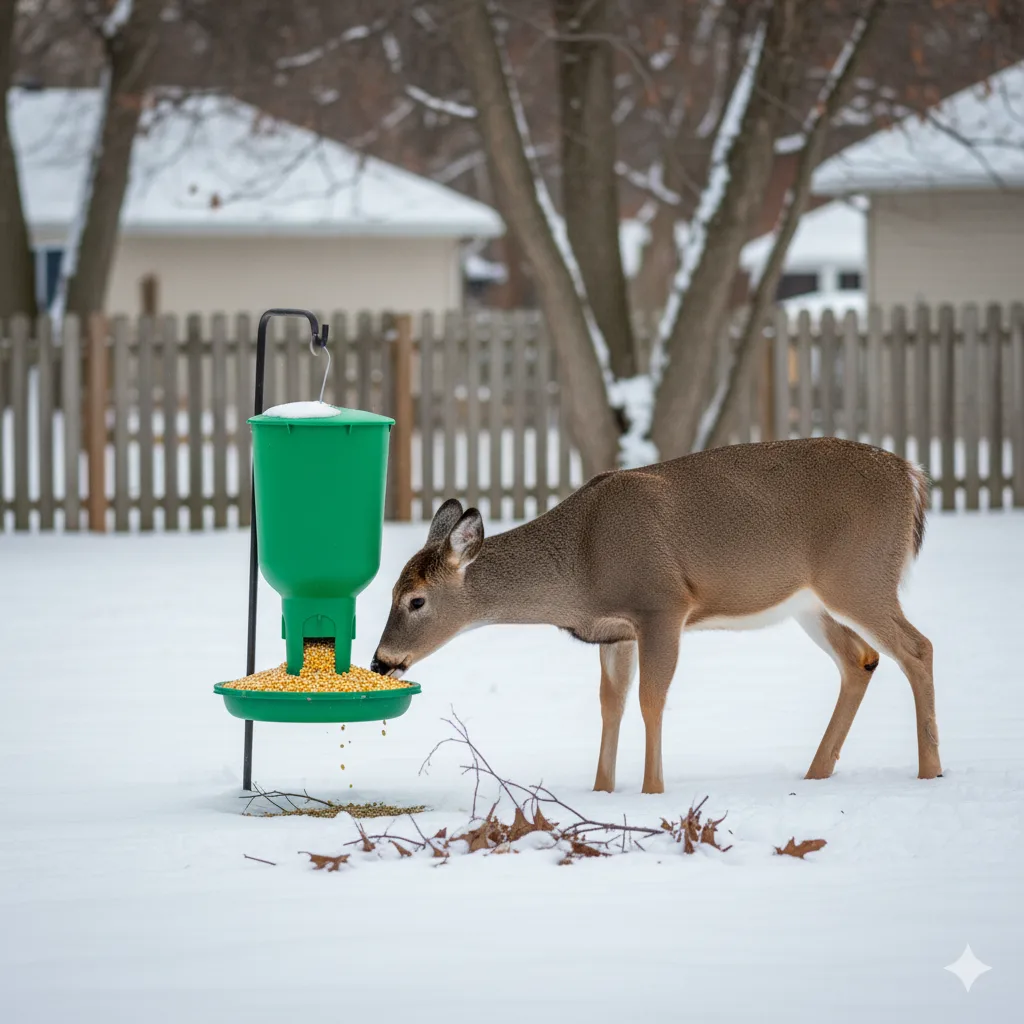
Here’s why:
A. Sudden Diet Changes Can Be Deadly
Deer’s stomachs adapt to digest woody material in winter. If they suddenly eat high-starch food (like corn), it can cause acidosis, a fatal digestive disorder.
B. Feeding Sites Attract Disease and Predators
Concentrating deer in one area increases the spread of diseases such as chronic wasting disease (CWD) and makes them easy targets for predators.
C. Dependency on Human Food
Regular feeding disrupts natural behavior and migration patterns, making deer dependent on humans for survival.
In short: unless you’re a wildlife professional using approved feed types, it’s best not to feed wild deer.
5. Legal Deer Feeding Rules in the USA and Canada
Feeding regulations vary widely depending on your location — especially where CWD or other diseases are a concern.
United States:
- Banned in many states: States like Minnesota, Michigan, and Wisconsin prohibit feeding or baiting deer due to disease control efforts.
- Restricted in others: Some states allow limited feeding during winter but with rules on feed type and placement.
- Always check local wildlife agency regulations before putting out any food.
Canada:
- In provinces like Ontario and Alberta, feeding deer is discouraged or regulated due to ecological impact.
- Wildlife authorities recommend habitat management (like planting browse species) rather than artificial feeding.
Bottom line: Always verify your region’s laws before offering supplemental feed — even with good intentions.
6. Safe Ways to Help Deer in Winter (Without Feeding Them)
If you want to support deer during harsh winters, here are safer, eco-friendly alternatives to feeding:
- Preserve natural habitat: Leave shrubs, fallen branches, and native vegetation intact.
- Plant deer-friendly trees and shrubs: Oak, dogwood, and crabapple provide natural winter food.
- Avoid disturbing bedding areas: Keep pets and vehicles away from wooded shelter zones.
- Provide a water source: A heated birdbath or natural stream can be life-saving when everything else is frozen.
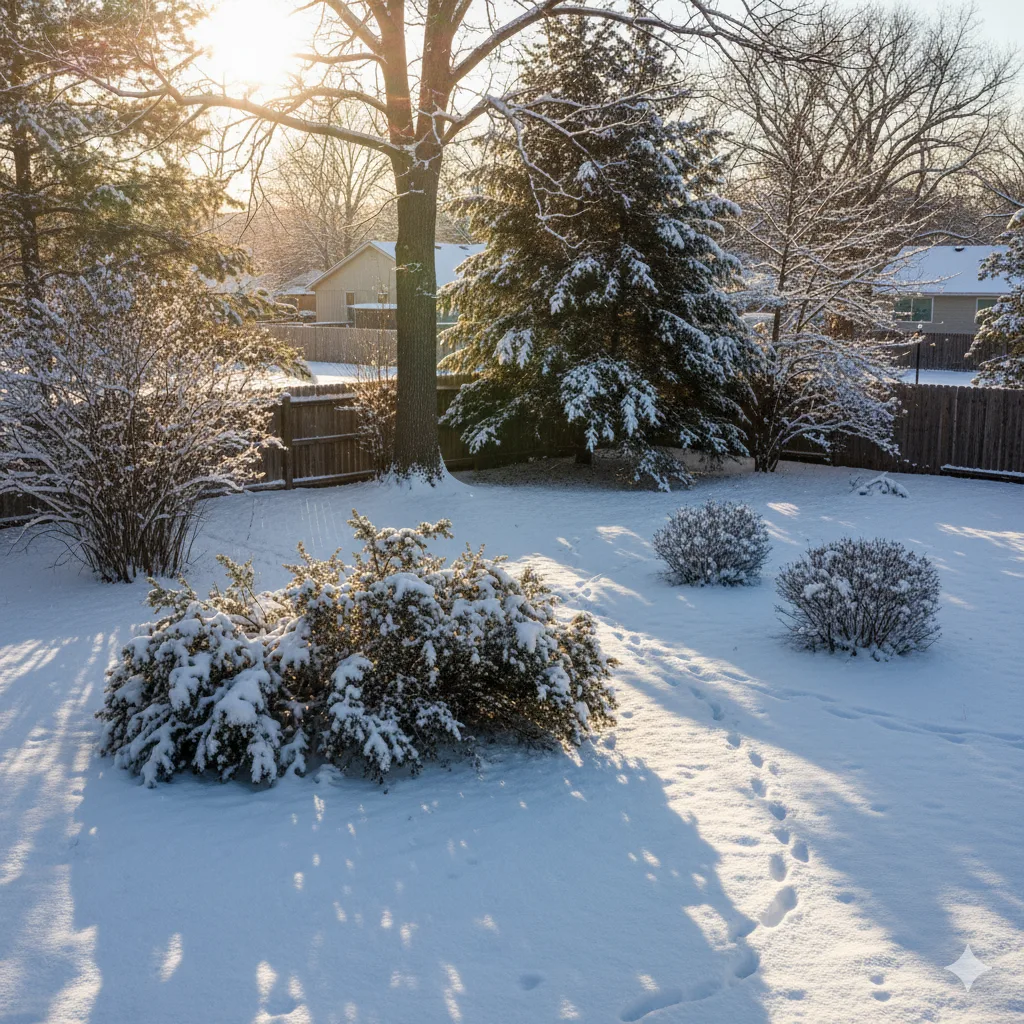
These small actions help deer survive without disrupting their natural balance.
7. What Deer Feeding Laws Teach Us About Wildlife Ethics
At its core, deer feeding laws are about respecting nature’s design. While humans have compassion, nature has its own rhythm — and interference can unintentionally cause harm.
By allowing deer to follow their natural instincts, we ensure ecosystems remain healthy, balanced, and self-sustaining.
Conclusion: A Lesson in Natural Resilience
So, what do deer eat in the winter? From woody twigs to acorns buried under snow, deer rely on resourcefulness and adaptation to survive.
Their ability to endure long winters — without migration or hibernation — is a powerful reminder that nature provides everything it needs when left undisturbed.
Whether you live in the USA, Canada, or beyond, understanding these feeding behaviors helps you appreciate deer not just as beautiful animals, but as resilient survivors of the wild.