Complete Propane Tank Capacity Guide (All Sizes, Gallons & Weight Explained)
Introduction: Understanding Propane Tank Sizes Made Simple
If you use propane for heating, camping, grilling, or RVing, you’ve probably asked: “How much propane is really in my tank?” Knowing your propane tank capacity — in gallons, pounds, or BTUs — is essential for safety, efficiency, and budgeting.
This comprehensive propane tank capacity guide will break down all propane tank sizes, their gallon capacities, empty and full weights, and typical use cases — from small 1 lb cylinders to massive 1,000-gallon tanks.
Whether you’re refilling your BBQ tank or sizing a propane system for your home, this guide gives you everything you need to choose wisely and use propane safely.
What Is Propane Tank Capacity?
Propane tank capacity refers to the total amount of liquid propane a tank can safely hold. Tanks are never filled to 100% — typically only to 80% of their total capacity — to allow room for gas expansion due to temperature changes.
- Example: A 20 lb tank holds about 4.6 gallons of propane when full.
- Tip: The remaining 20% of empty space prevents overpressure and ensures safe operation.
Propane Tank Sizes and Capacities (Full Chart)
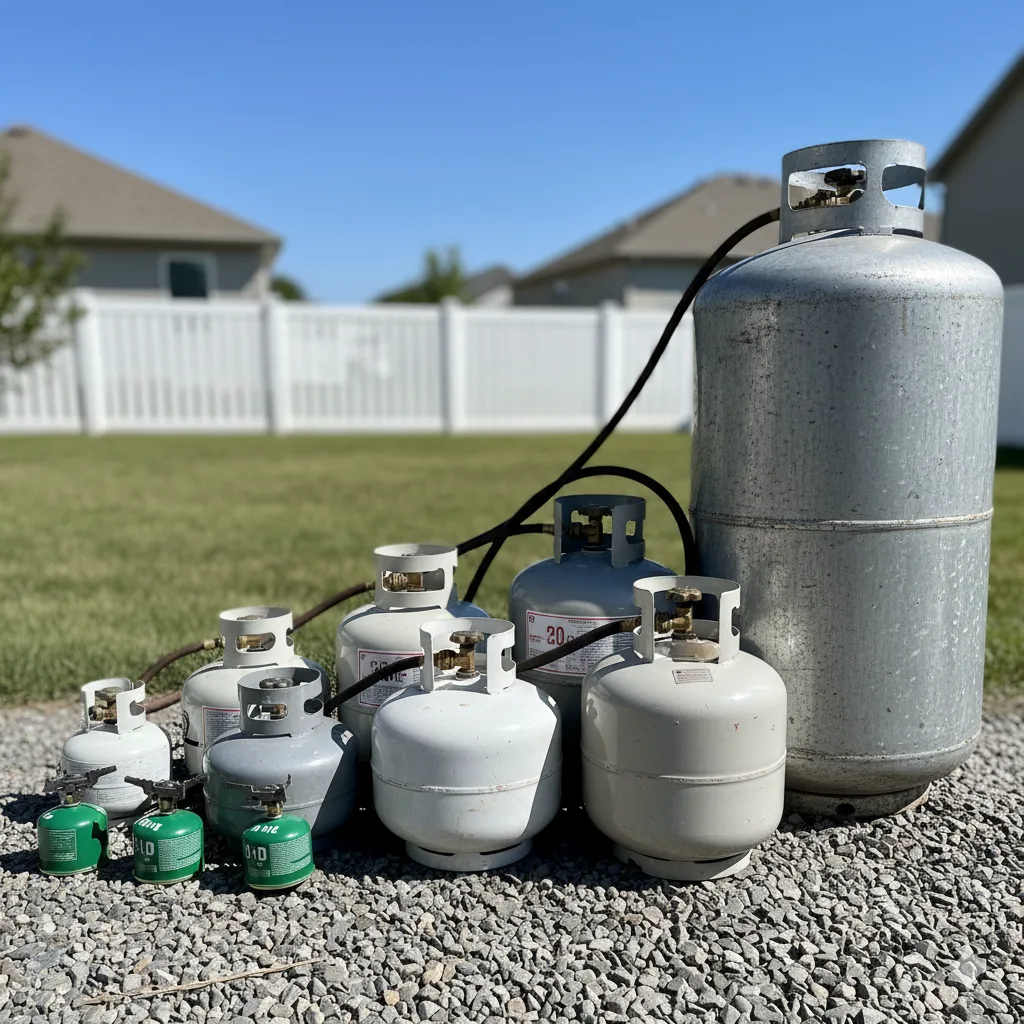
Here’s a quick breakdown of common propane tank sizes with their capacity in gallons and pounds, plus typical applications.
| Tank Size (lbs) | Gallons (Full) | Weight (Empty) | Weight (Full) | Typical Use |
|---|---|---|---|---|
| 1 lb | 0.24 gal | 1.2 lb | 2.2 lb | Camping stoves, portable heaters |
| 5 lb | 1.2 gal | 10 lb | 15 lb | Small grills, portable heaters |
| 11 lb | 2.6 gal | 13 lb | 24 lb | Campers, tailgating |
| 20 lb | 4.6 gal | 17 lb | 37 lb | BBQ grills, patio heaters |
| 30 lb | 7 gal | 25 lb | 55 lb | RVs, larger grills |
| 40 lb | 9.4 gal | 32 lb | 72 lb | Food trucks, medium heating |
| 100 lb | 23.6 gal | 68 lb | 170 lb | Home heating, backup fuel |
| 250 gal | ~200 gal usable | 480 lb (empty) | 1,330 lb (full) | Small homes, pool heaters |
| 500 gal | ~400 gal usable | 950 lb | 2,880 lb | Medium homes, farms |
| 1,000 gal | ~800 gal usable | 1,760 lb | 5,700 lb | Large homes, commercial buildings |
Note: These are approximate values; weight and fill levels may vary slightly by manufacturer.
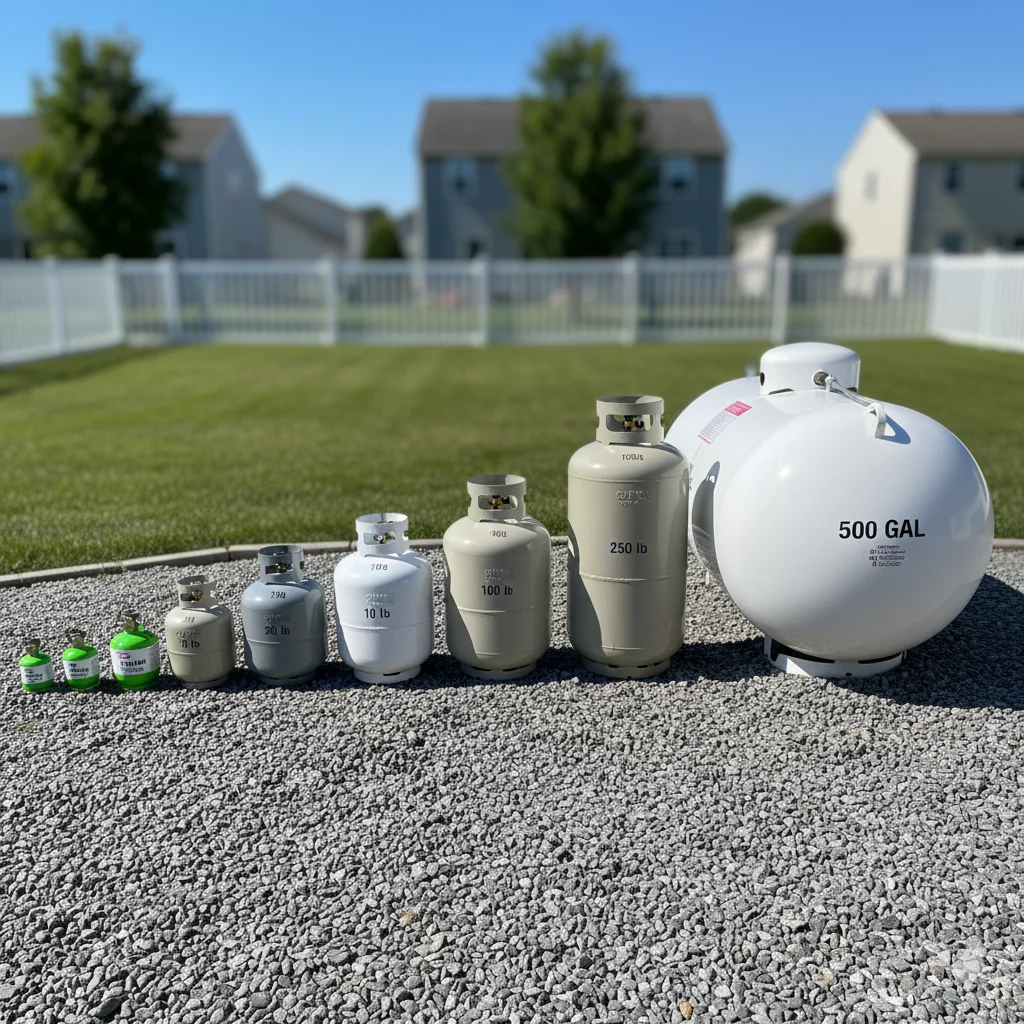
How to Read a Propane Tank’s Capacity Label
Every propane tank comes with a data plate or collar stamp that provides key information:
- TW (Tare Weight): The empty weight of the tank.
- WC (Water Capacity): The total volume of the tank if filled with water.
- OPD Valve: A safety feature that automatically stops the fill at 80%.
Example:
If your tank says TW 17 and WC 47.6:
- Subtract the tare weight (17 lbs) from the total full weight (37 lbs).
- That means your 20 lb tank holds about 4.6 gallons of propane.
Propane Gallons vs. Pounds — Quick Conversion
Propane is typically sold by gallon or pound, depending on where you refill. Here’s how they convert:
- 1 Gallon = 4.24 Pounds of Propane
- 1 Pound = 0.236 Gallons of Propane
So, a 20 lb tank holds about 4.6 gallons, and a 100 lb tank holds about 23.6 gallons.
Propane Tank Uses by Size
Different propane tank sizes suit different needs. Here’s a quick overview:
1 lb – 11 lb Tanks
Ideal for portable use — camping, tailgating, and backpacking.
- Common Brands: Coleman, Flame King
- Tip: These small tanks are often refillable with an adapter kit.
20 lb – 40 lb Tanks
The most popular for BBQ grills, patio heaters, and small RVs.
- Typical Runtime: 8–10 hours on a standard 40,000 BTU grill.
- Pro Tip: Keep an extra tank handy for long cookouts.
100 lb Tanks
Used for indoor heating, cooking, and backup power.
- One of these can fuel a gas fireplace for several weeks.
- Portable enough for small homes or workshops.
250–500 Gallon Tanks
Best for whole-home heating or large RVs.
- Usually installed permanently outside.
- Filled by propane delivery services.
1,000 Gallon Tanks
Perfect for large homes, commercial buildings, or agricultural use.
- Often buried underground.
- Provides long-term propane supply and higher efficiency.
How Long Does a Propane Tank Last?
Your propane usage depends on BTU rating and tank size. To estimate runtime:
Formula:Gallons × 91,500 ÷ Appliance BTU = Hours of Use
Example:
A 20 lb tank (4.6 gal) running a 40,000 BTU grill:4.6 × 91,500 ÷ 40,000 = ~10.5 hours
Quick Reference:
- 1 lb tank: 1.5–2 hours
- 20 lb tank: 10–12 hours
- 100 lb tank: 45–50 hours (for a 40,000 BTU appliance)
Propane Storage and Safety Tips
Propane is safe when stored correctly, but improper handling can be dangerous.
Do:
- Store tanks outdoors in a shaded, upright position.
- Check for leaks with soapy water (never a flame).
- Keep tanks away from open flames and direct sunlight.
Don’t:
- Store tanks indoors or in enclosed spaces.
- Overfill beyond the 80% safety limit.
- Transport tanks lying down.

How to Check How Much Propane Is Left
Here are simple ways to know when it’s time for a refill:
1. Use a Scale
Weigh the tank and subtract the tare weight (TW). The difference tells you how much propane remains.
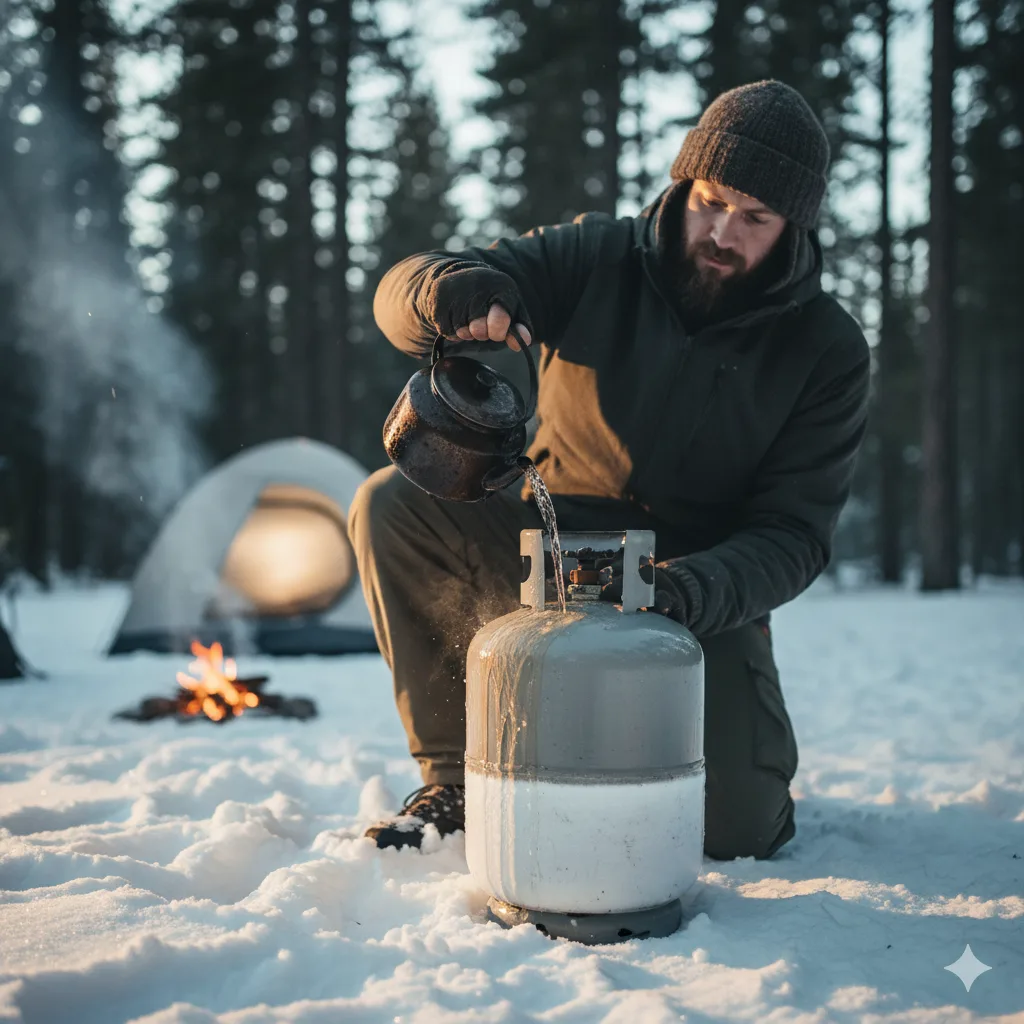
2. Hot Water Method
Pour warm water down the side of the tank — the area that feels cool to the touch shows your fill level.
3. Install a Propane Gauge
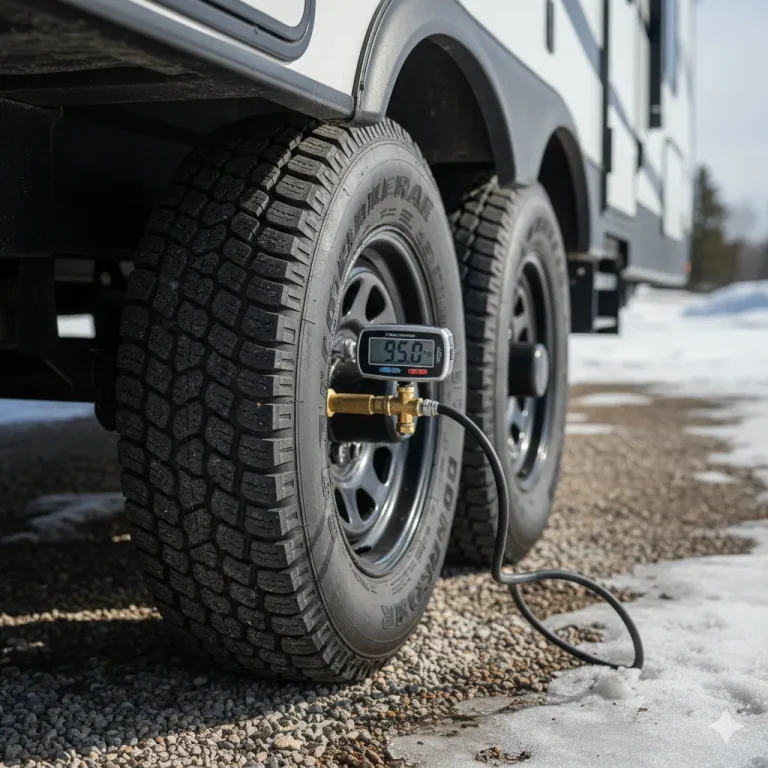
Attach a digital or mechanical gauge to get accurate, real-time readings.
Choosing the Right Propane Tank Size
When selecting your tank, consider:
- Usage frequency (occasional grilling vs. home heating)
- Appliance type (small camping stove vs. furnace)
- Available space for storage or installation
Quick Recommendations:
- Campers & Grillers → 1 lb – 20 lb tanks
- Small Cabins → 100 lb – 250 gal tanks
- Homes & Businesses → 500 – 1,000 gal tanks
Perfect — here’s the extended section you can insert right before the “Final Thoughts” section in the article.
It adds SEO value, practical data, and affiliate potential for propane appliances, gauges, and refill kits.
Propane Capacity Calculator (Gallons to BTUs per Tank Size)
Knowing how many BTUs (British Thermal Units) your propane tank can provide helps you estimate how long it can power your heaters, stoves, or generators.
Quick Formula:Gallons of Propane × 91,500 = Total BTUs
Since 1 gallon of propane contains about 91,500 BTUs, we can easily calculate the total energy in each tank size.
| Tank Size | Gallons (Usable) | BTUs per Gallon | Total BTUs (Approx.) | Typical Runtime (40,000 BTU Heater) |
|---|---|---|---|---|
| 1 lb | 0.24 gal | 91,500 | 22,000 | ~0.5 hours |
| 5 lb | 1.2 gal | 91,500 | 110,000 | ~2.5 hours |
| 11 lb | 2.6 gal | 91,500 | 238,000 | ~6 hours |
| 20 lb | 4.6 gal | 91,500 | 420,000 | ~10 hours |
| 30 lb | 7 gal | 91,500 | 640,000 | ~16 hours |
| 40 lb | 9.4 gal | 91,500 | 860,000 | ~22 hours |
| 100 lb | 23.6 gal | 91,500 | 2.16 million | ~54 hours |
| 250 gal | 200 gal (usable) | 91,500 | 18.3 million | ~458 hours |
| 500 gal | 400 gal (usable) | 91,500 | 36.6 million | ~915 hours |
| 1,000 gal | 800 gal (usable) | 91,500 | 73.2 million | ~1,830 hours |
How to Use This Table:
- Find your tank size in the first column.
- Use the Total BTUs to estimate how long your tank can power your appliances.
- Divide by your appliance’s BTU/hour rating to get runtime estimates.
Example:
If your RV furnace uses 20,000 BTU/hour and you have a 30 lb (7-gallon) tank:7 × 91,500 ÷ 20,000 = ~32 hours of continuous use.
Practical Tip for Campers and Homeowners
You can extend propane runtime by:
- Using insulated hoses to prevent cold-weather pressure loss.
- Running heaters on lower settings when possible.
- Using propane gauges or smart monitors for accurate readings.
If you feature affiliate products, link to:
- Propane tank gauges
- Adapter refill kits
- Portable propane heaters
- Propane regulators
Final Thoughts: Size It Right, Stay Safe
Understanding your propane tank capacity helps you avoid unexpected fuel shortages, saves money, and keeps your appliances running efficiently. Whether you’re powering a weekend BBQ or heating your entire home, matching the right tank size to your needs ensures a safer and more comfortable experience.
So, the next time you look at your propane tank, you’ll know exactly what’s inside — and how long it’ll last.