How to Let Air Out of a Tire: Safe & Easy 2-Step Methods for RVers
Maintaining proper tire pressure is one of the most important safety habits for RVers. Whether you accidentally overinflated a tire or need to reduce PSI for off-road conditions, knowing How to Let Air Out of a Tire quickly and safely is an essential skill. The process is simple, requires minimal tools, and can be done in just a few minutes when you understand the correct technique.
This guide explains two proven methods to release air safely, without damaging the tire valve or causing unnecessary pressure loss. You will learn the exact steps, tools required, common mistakes to avoid, and answers to frequently asked questions from RV owners.
1. Why You May Need to Release Air From a Tire
There are several situations where learning How to Let Air Out of a Tire becomes necessary. Many RVers accidentally overinflate a tire when using a roadside pump, home compressor, or gas station air station. Overinflation makes tires stiff, reduces traction, and increases the risk of damage or blowouts during travel.
Another common reason is off-road driving. Lower tire pressure improves traction and allows the tire to flex over rough or sandy terrain. For these conditions, controlled deflation ensures better handling and a smoother ride.
When done correctly, releasing air is quick, safe, and reliable.
2. How to Let Air Out of a Tire Using a Screwdriver (Fast and Simple)
The simplest way to lower tire pressure is by using a small tool you already have in your RV or tow vehicle. A screwdriver, key, pen tip, or similar object works perfectly. This method is fast and requires no special equipment.
Step-by-Step Instructions
- Remove the valve cap and place it somewhere secure so it does not get lost.
- Press the tip of your screwdriver straight down onto the valve stem pin.
- Hold steady pressure to release air.
- Stop and check PSI regularly with a tire gauge.
- Continue until the tire reaches your desired pressure.
- Replace the valve cap to keep dust and moisture out.
Important Tips
- Do not press the valve pin at an angle. This can bend or damage it.
- Air escapes quickly, so monitor the pressure often.
- Always use a gauge to confirm PSI; guessing leads to underinflation.
This method is ideal for quick adjustments but requires careful attention.
3. How to Let Air Out of a Tire Using a Tire Deflator (Most Accurate Method)
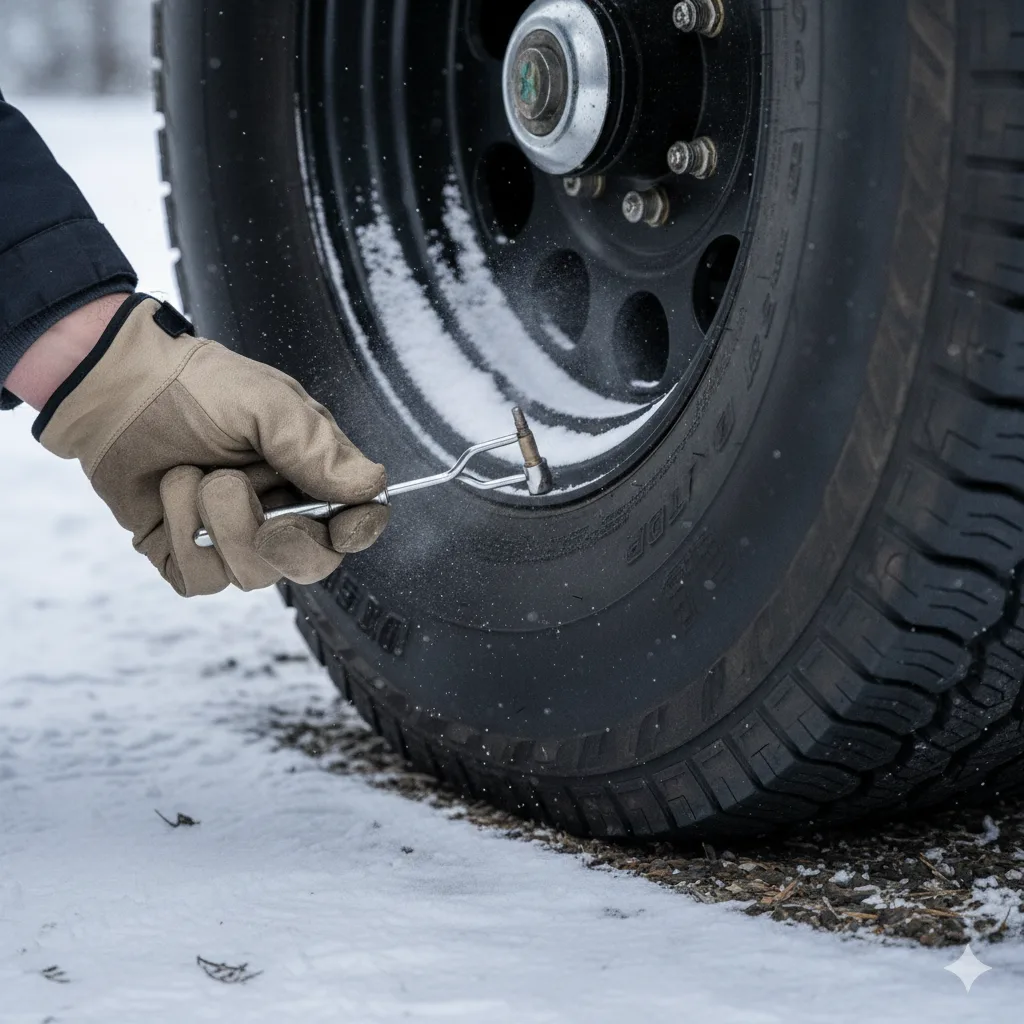
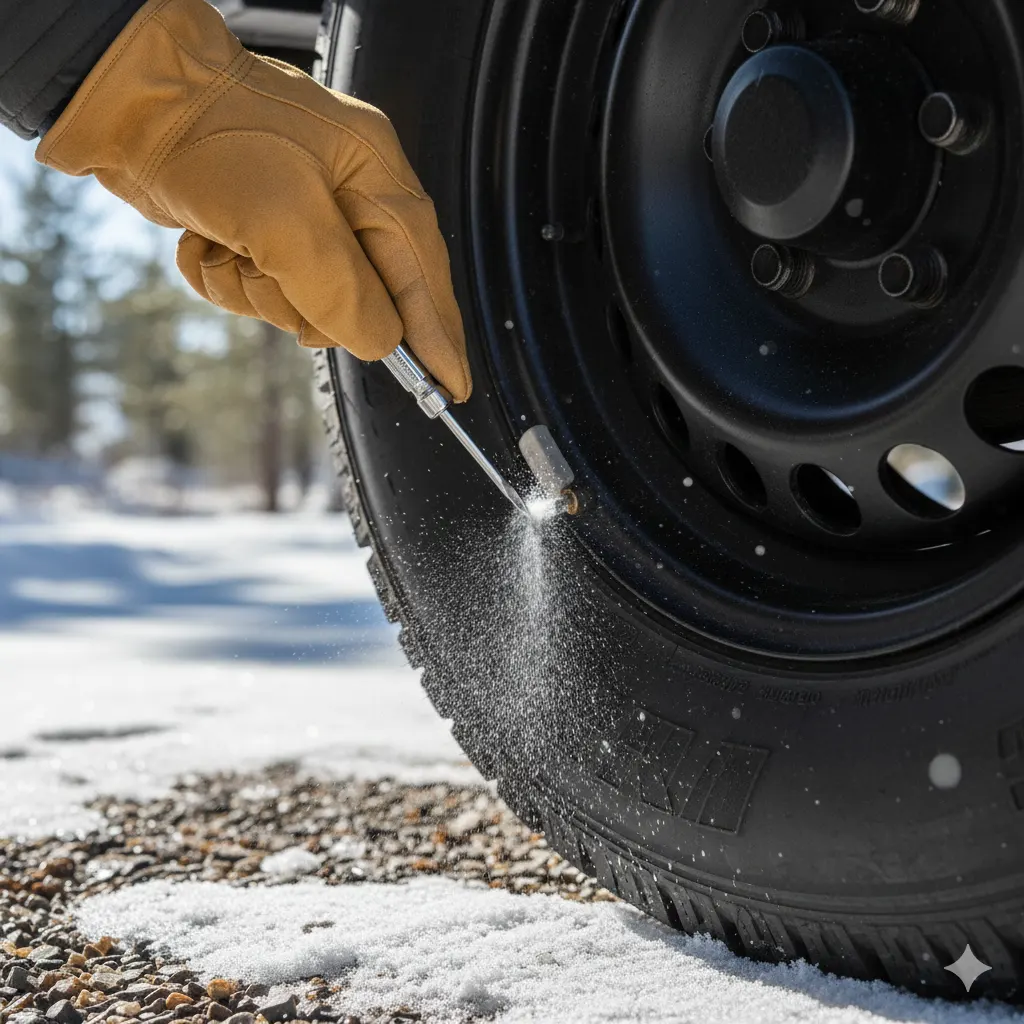
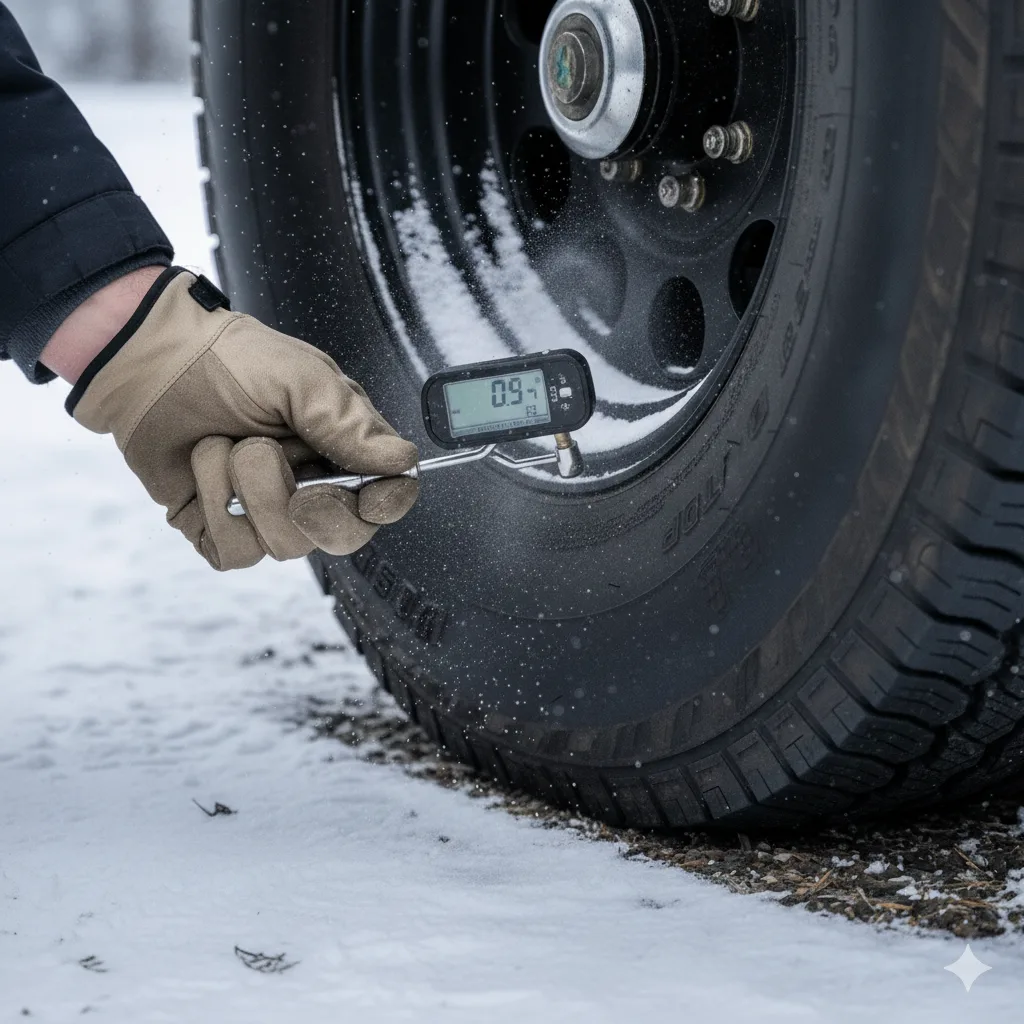
For precision, nothing works better than a tire deflator with a built-in bleeder valve. These tools are designed specifically for controlled air release and accurate PSI readings. Off-road drivers and full-time RVers often rely on them.
How to Use a Tire Deflator
- Remove the valve cap and set it aside.
- Press the tire gauge or deflator tool firmly onto the valve stem.
- Use the bleeder button to slowly release air.
- Watch the pressure reading in real time.
- Stop exactly when the tire reaches the correct PSI.
Why This Method Is Recommended
- Provides accurate PSI measurement
- Prevents over-deflation
- Safer for the valve core
- Ideal for lowering pressure for off-road travel
This is the best solution when you want professional-level control over air release.
4. Why Removing the Valve Cap Does Not Release Air
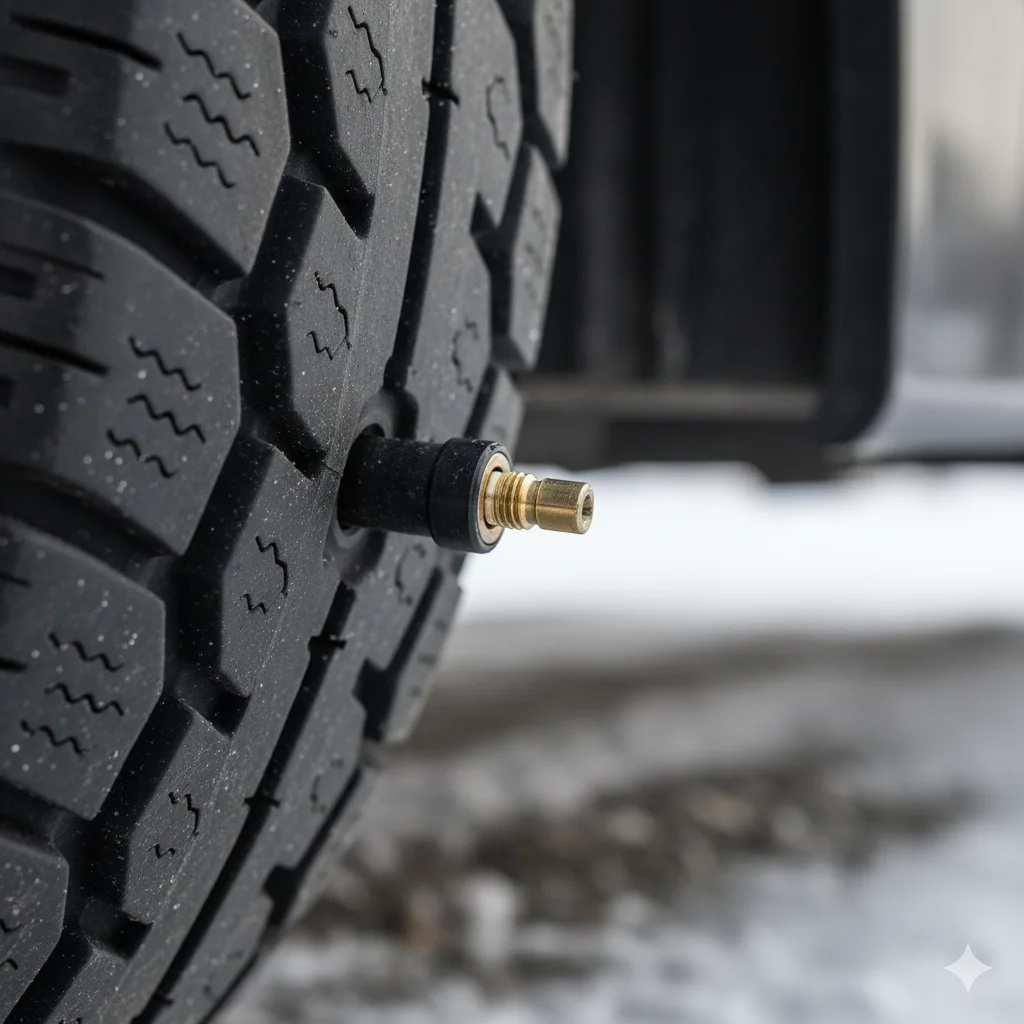
Some people believe unscrewing the valve cap allows air to escape, but this is false. The valve cap only serves as protection.
What the Valve Cap Actually Does
- Keeps dust and debris out
- Prevents moisture from entering the valve
- Protects the valve core from corrosion
The air is held inside the tire by the valve core, not the cap.
5. When You Should Reduce Tire Pressure
Reducing tire pressure is sometimes necessary, but should not be done in all situations.
Appropriate Times to Lower Pressure
- Driving on sand, dirt roads, or rocky trails
- Improving traction off-road
- Correcting accidental overinflation
Do Not Reduce Pressure When:
- Driving on highways or paved roads
- Tires are hot from recent driving
- You are unsure of the correct PSI
Driving on paved roads with reduced pressure can cause excessive heat buildup and potential tire failure.
6. Common Questions About Tire Deflation
Does checking tire pressure release air?
Most gauges release a small amount of air, but it is minimal. A high-quality gauge prevents noticeable loss.
Can you overinflate a tire?
Yes. Overinflated tires have reduced traction, more wear in the center tread, and a higher risk of blowouts.
Should you release air from a hot tire?
No. Tire pressure rises when tires heat up. Always check and adjust PSI once tires cool.
Is it safe to drive with underinflated tires?
No. Underinflation increases heat, reduces control, and damages tire sidewalls.
7. Safety Tips for Releasing Tire Pressure
- Always check the recommended PSI in your vehicle or RV manual.
- Use a reliable gauge for accuracy.
- Release air slowly to avoid dropping PSI too quickly.
- Avoid using sharp objects that could puncture the valve.
- Replace the valve cap after deflating the tire.
Proper technique prevents long-term valve damage.
8. Final Thoughts
Knowing How to Let Air Out of a Tire is a practical skill every RVer and driver should have. Whether you need to correct overinflation or prepare for off-road travel, the two proven methods outlined in this guide make deflation quick, safe, and easy.
Use the screwdriver method for fast adjustments and the tire deflator method for precise, controlled results. Always monitor pressure carefully and follow safety recommendations to keep your tires performing reliably on every trip.