Rv tire pressure guide: essential chart & safe inflation tips every RVer should know
Proper tire pressure is one of the most important safety factors for any RVer. Underinflated tires run hot, cause blowouts, reduce fuel efficiency, and create poor handling. Overinflated tires become hard, lose traction, and wear unevenly. This rv tire pressure guide will walk you through correct PSI ranges, inflation methods, warnings, and practical tire-care tips to help you travel with confidence.
By the end of this rv tire pressure guide, you will understand recommended tire pressure, how to check PSI accurately, and what mistakes to avoid so your RV stays safe on every trip.
1. Why Tire Pressure Matters for RV Safety
The foundation of this rv tire pressure guide begins with understanding why PSI matters. RVs carry heavy loads and place far more stress on tires than typical passenger vehicles. When pressure falls below recommended levels, tires flex excessively, generate heat, and become prone to blowouts. Conversely, overinflated tires become stiff and less capable of absorbing road shock, increasing the risk of tread separation.
Stable tire pressure ensures:
- Better braking performance
- Improved fuel efficiency
- Longer tire life
- Reduced risk of failure on the highway
- Safer towing and steering response
Most RV tire issues come from incorrect PSI—not old tires. That is why following a detailed rv tire pressure guide is essential.
2. RV Tire Pressure Basics
The correct PSI for your RV depends on:
- The tire load rating
- Total RV weight
- Axle distribution
- Tire type (ST, LT, trailer-specific, or motorhome-rated)
You can locate PSI recommendations:
- On the tire sidewall
- Inside your RV manual
- On the weight sticker near the driver’s seat or entry door
Always base your PSI on:
- Actual weight of your RV
- Tire manufacturer load chart
Never guess. Always measure.
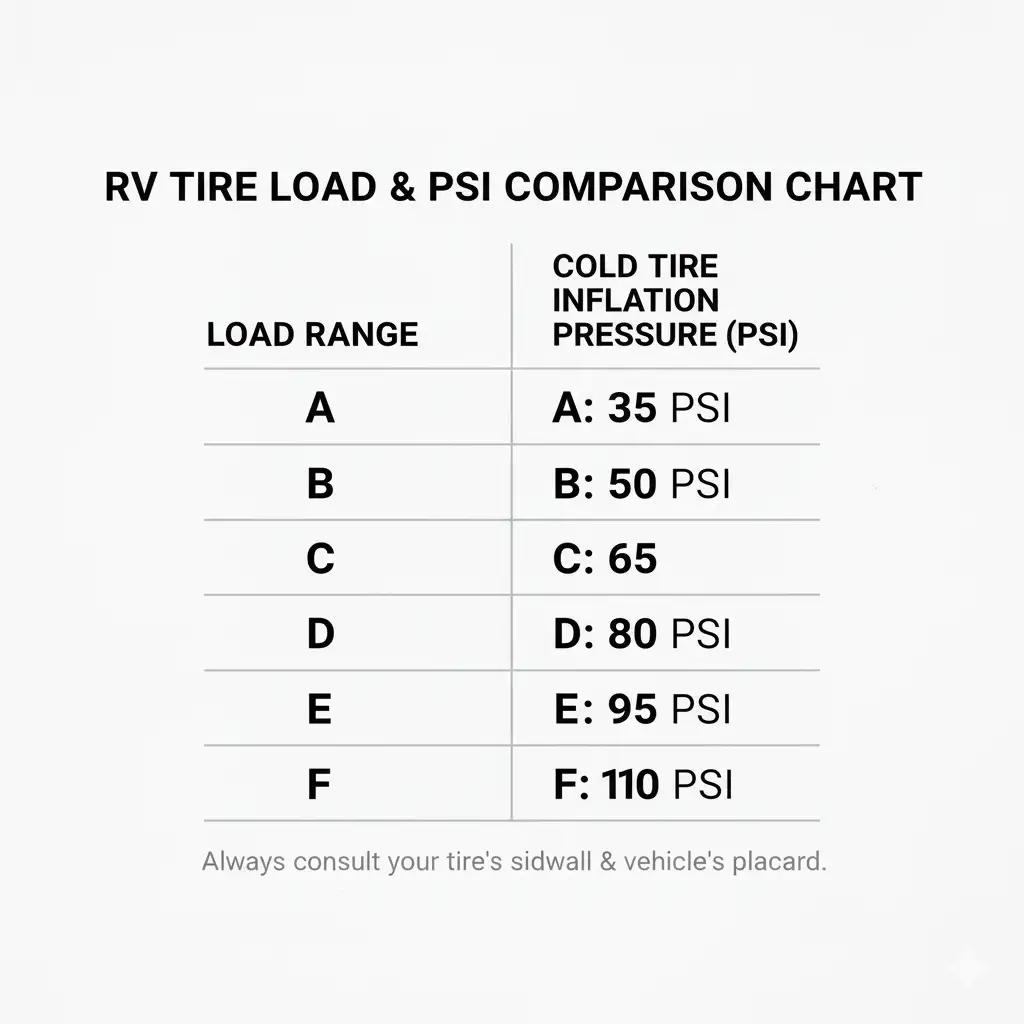
3. RV Tire Pressure Chart
Below is a simplified chart frequently referenced in an rv tire pressure guide. Values vary by brand, but this gives a baseline. Always verify with your tire’s manufacturer.
RV Tire Pressure Chart (Example Load vs PSI)
| Tire Load (lbs per tire) | Recommended PSI |
|---|---|
| 1,000 lbs | 45 PSI |
| 1,500 lbs | 50 PSI |
| 2,000 lbs | 55 PSI |
| 2,500 lbs | 65 PSI |
| 3,000 lbs | 70 PSI |
| 3,500 lbs | 75 PSI |
| 4,000 lbs | 80 PSI |
This chart is only a guideline, but it helps illustrate why accurate weight measurement matters.
4. How to Inflate RV Tires Correctly
Proper inflation is a critical part of any rv tire pressure guide. Here are the correct steps:
Step 1: Check PSI When Tires Are Cold
Tires heat up when driving. Always test pressure before you start your trip.
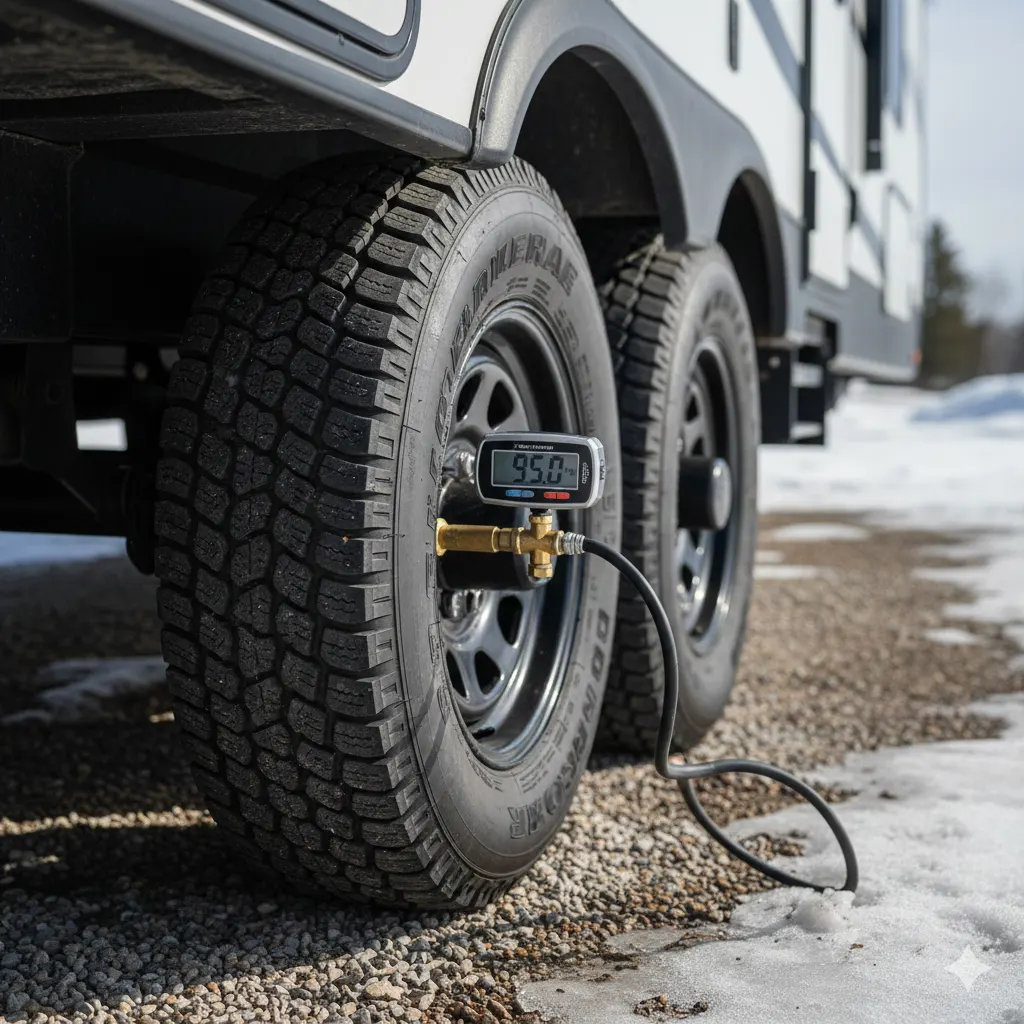
Step 2: Use a High-Quality Tire Gauge
Digital or heavy-duty analog gauges provide the most accurate results.
Step 3: Inflate to Manufacturer Specifications
Match your PSI to load charts and real weight.
Step 4: Use the Right Air Source
Options include:
- RV park air stations
- Home air compressors (high-capacity)
- Gas station heavy-duty compressors
Step 5: Recheck PSI After Driving
Pressure may rise as the tires warm. Do not bleed air from hot tires.
Following these steps ensures your rv tire pressure guide remains effective in real driving conditions.
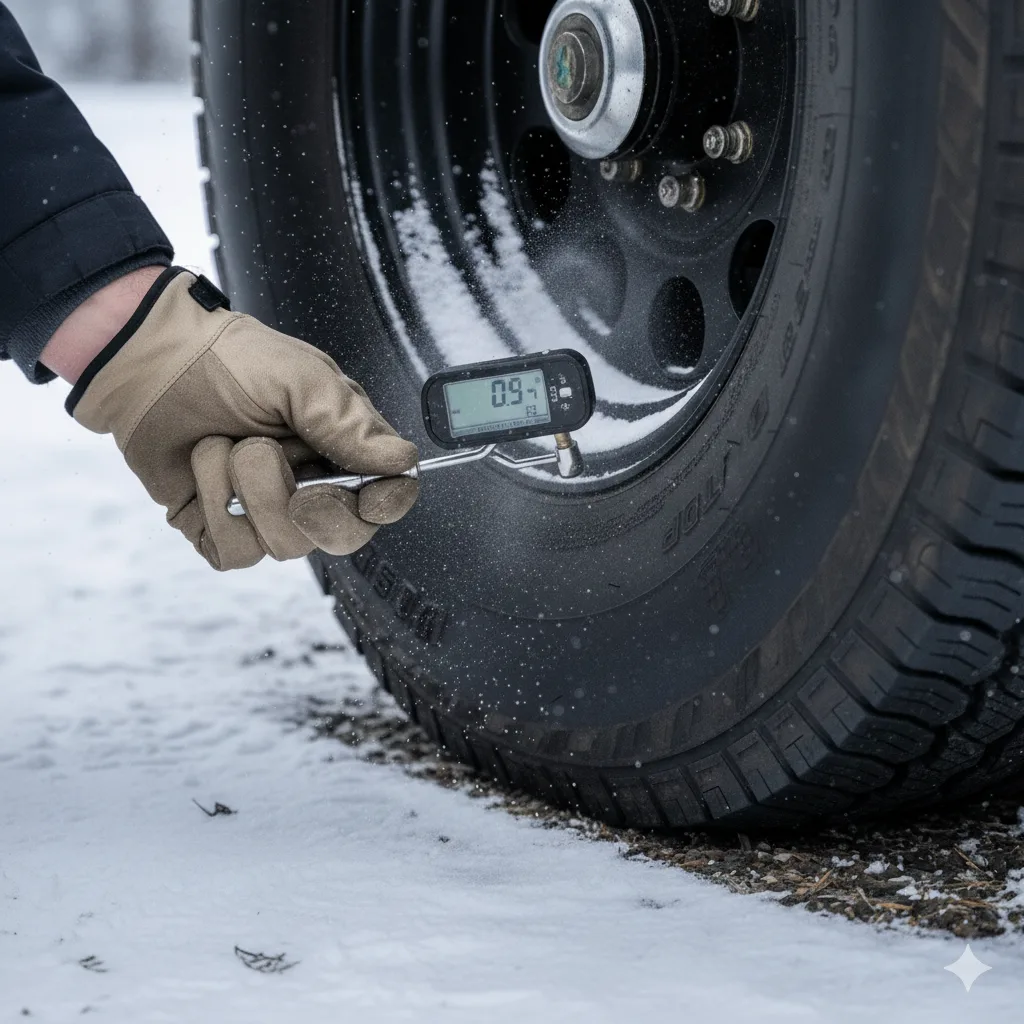
5. How Temperature Affects RV Tire Pressure
Temperature changes are one of the most overlooked factors in this rv tire pressure guide. Tire pressure naturally fluctuates with outdoor temperatures.
General rule:
- For every 10-degree temperature difference, tire pressure changes by about 1 PSI.
Examples:
- Cold mornings may reduce PSI.
- Hot afternoons may raise PSI.
This is why many RVers find different readings throughout the day. Always set your PSI in stable morning temperatures before driving.
6. Common Warnings and Safety Mistakes
The most important warnings from any rv tire pressure guide include:
Do Not Bleed Air From Hot Tires
Pressure rises as tires warm. Bleeding air causes dangerous underinflation later.
Do Not Rely on Visual Inspection
An underinflated RV tire can look full. Only a gauge is accurate.
Do Not Exceed Load Ratings
Overloaded tires fail much faster, even at perfect PSI.
Avoid Cheap Tire Gauges
Low-quality gauges can be off by 5–10 PSI, creating unsafe conditions.
Replace Valve Stems Regularly
Cracked or weak stems cause slow leaks and dangerous pressure drops.
These warnings help you avoid common causes of tire blowouts.
7. Tire Monitoring Tools and Best Practices
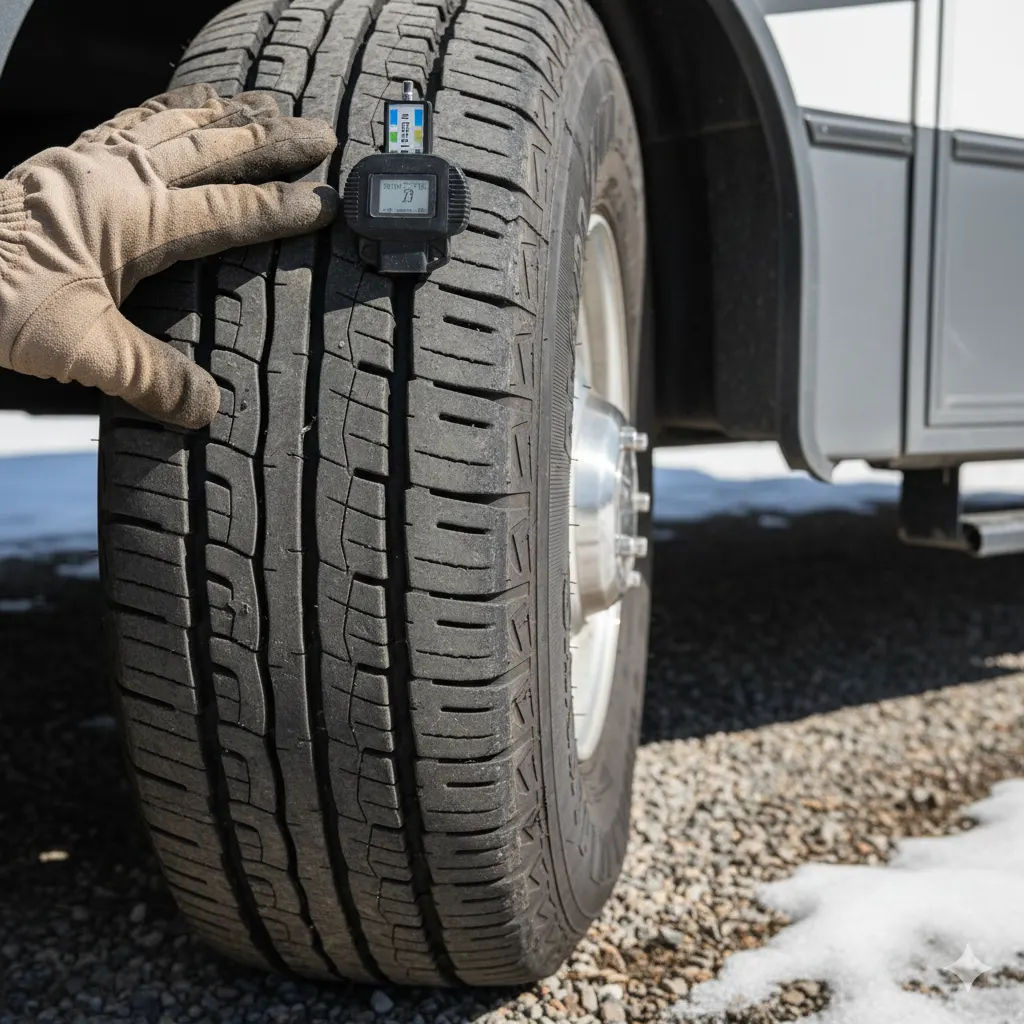
A modern rv tire pressure guide always recommends using a TPMS (Tire Pressure Monitoring System). These systems alert you to:
- Sudden pressure drops
- Slow leaks
- High-temperature warnings
- Overinflation or underinflation
Other helpful tools:
- Heavy-duty air compressor
- Metal valve stems
- Accurate load scales at weigh stations
Regular inspections prevent unexpected roadside emergencies.
8. Frequently Asked Questions
What is the ideal tire pressure for RV travel?
It depends on your tire’s load rating and weight. Always refer to a chart.
Should I fill RV tires to the number on the sidewall?
Only if your RV is at maximum weight. Sidewall PSI is an upper limit, not always your required PSI.
What happens if RV tires are underinflated?
Underinflation causes heat buildup, poor handling, and blowouts.
Should I check RV tire pressure daily?
On long trips, yes. At minimum, check before each travel day.
9. Final Thoughts
This rv tire pressure guide is designed to help you travel safely, maintain your RV’s performance, and prevent dangerous tire failures. Correct PSI ensures smoother towing, longer tire life, and better handling in all conditions. With accurate weight measurement, proper tools, and consistent monitoring, you can confidently maintain your tires and enjoy worry-free adventures.