How to Insulate a Tent for Winter Camping: 9 Genius Tips (So You Don’t Freeze)
Winter camping brings a unique sense of peace — crisp air, quiet landscapes, and starry skies that feel close enough to touch. But let’s be honest: sleeping in a tent during freezing temperatures can turn miserable fast if you’re not prepared.
That’s where insulation comes in. Knowing how to insulate a tent for winter camping isn’t just about staying cozy — it’s about comfort, safety, and survival. With the right materials and smart setup, you can trap warmth efficiently and enjoy a good night’s sleep, even when the world outside your tent is frozen solid.
In this guide, we’ll cover 9 genius insulation tips to help you camp comfortably through the coldest months of the year.
Why Tent Insulation Matters in Winter Camping
Even high-quality four-season tents lose heat rapidly in freezing conditions. Your body heat escapes through the floor, walls, and roof, while icy winds and condensation make things worse.
Proper insulation helps you:
- Trap warmth inside your tent
- Block cold air and drafts
- Reduce condensation buildup
- Sleep comfortably and safely
Let’s dive into the most effective, field-tested ways to keep your tent warm all night long.
1. Choose the Right Tent for Winter
Insulation starts with the tent itself. If you’re camping in subfreezing conditions, skip ultralight summer tents — they’re not designed for heat retention.
What to look for:
- A four-season tent with strong poles, thicker fabric, and minimal mesh.
- A dome or geodesic shape that resists wind and snow load.
- A double-wall design (inner tent + outer rainfly) to create an insulating air gap.
Pro Tip: Avoid large tents in winter. A smaller space is easier to heat with your body warmth and sleeping system.
2. Insulate the Tent Floor First
The ground is your biggest heat thief. Cold air and moisture seep up fast, especially if you’re camping on snow or frozen soil.
How to insulate your tent floor:
- Lay a tarp or groundsheet beneath the tent to block moisture.
- Inside, place foam sleeping pads or interlocking foam tiles as a thermal barrier.
- Add a reflective emergency blanket (Mylar side up) beneath your sleeping pad to reflect heat.

This simple layering can raise inside temperatures by several degrees and prevent heat loss overnight.
3. Use Thermal Blankets or Reflective Insulation
One of the best low-cost tricks is using reflective insulation to trap and bounce your body heat back toward you.
Options include:
- Reflectix (foil bubble insulation): Lightweight and easy to cut to tent size.
- Mylar emergency blankets: Tape them to the inside walls or roof.
- Insulated liners: Some brands sell fitted thermal liners for popular tent models.
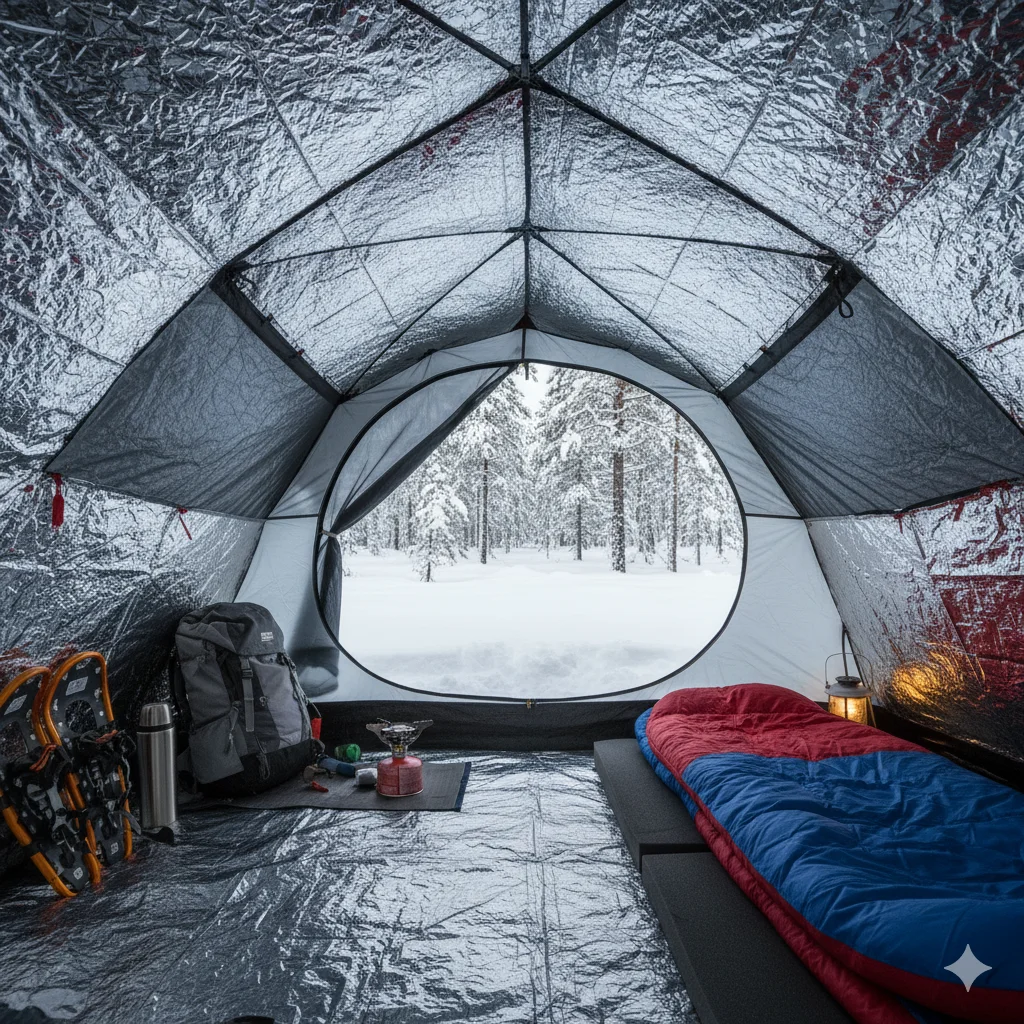
Be sure to leave a little airflow near the tent’s top to avoid condensation buildup overnight.
4. Add an Insulated Tent Liner or Inner Layer
If your tent allows, install a fabric liner or thermal inner wall. This adds an air gap — one of the most effective insulators.
DIY idea: Hang wool or fleece blankets on the tent’s interior walls using clips or paracord. You’ll instantly notice less draft and a warmer feel inside.
Bonus Tip: Insulated liners not only trap heat but also dampen outside noise and reduce condensation from your breath.
5. Create a Wind Barrier Outside the Tent
Even a well-insulated tent loses heat if it’s exposed to direct wind.
How to build a windbreak:
- Pitch your tent behind natural barriers such as trees, bushes, or rocks.
- Pile snow, logs, or gear bags around the tent’s base to block wind gaps.
- If conditions allow, use a tarp wall set up a few feet from your tent as a windscreen.
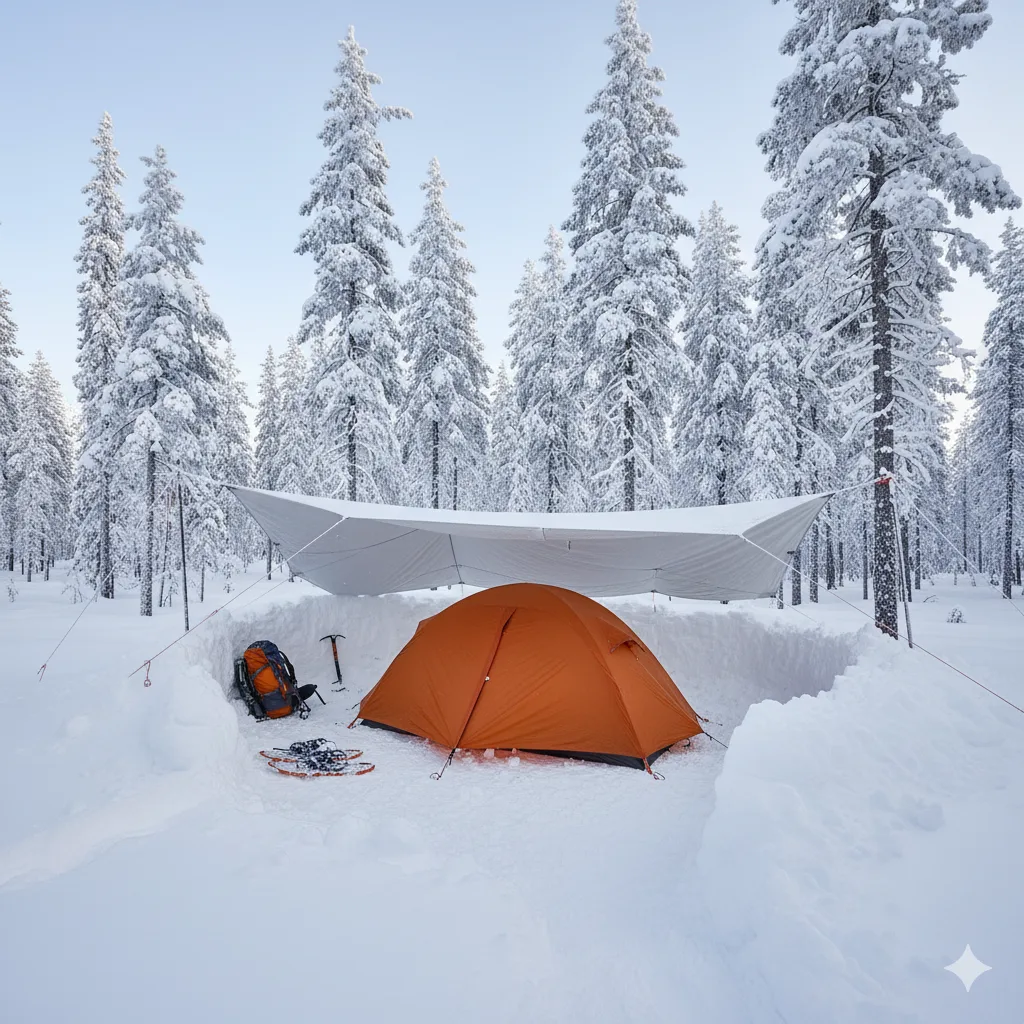
Reducing wind exposure can help maintain a consistent internal temperature — a major comfort boost during long, cold nights.
6. Insulate Yourself — Not Just the Tent
Even the most insulated tent can’t do all the work. The warmth inside comes primarily from you.
Use these body-heat-boosting hacks:
- Sleep in a high-quality winter sleeping bag (rated below the expected temperature).
- Add a liner to increase warmth by up to 10°F.
- Wear thermal base layers, wool socks, and a beanie.
- Fill a hot water bottle and tuck it at your feet before sleeping.
Your tent’s insulation will retain this heat more effectively when your body generates it efficiently.
7. Manage Condensation Carefully
In winter, moisture can ruin insulation fast. Condensation builds up as your warm breath hits cold tent walls, creating ice that melts later — soaking your gear.
How to control it:
- Keep vents slightly open to allow airflow.
- Avoid cooking or boiling water inside your tent.
- Use moisture-wicking materials (like fleece) inside rather than cotton.
Balanced ventilation is key: too little airflow leads to frost; too much causes cold drafts. Aim for gentle, continuous circulation.
8. Use Snow as an Insulator
This may sound counterintuitive, but snow actually insulates well when compacted. It traps air and blocks wind, similar to foam.
How to use snow effectively:
- Build a snow wall around your tent base, about 1–2 feet high.
- If you’re camping in deep snow, dig a shallow pit under your tent for natural wind protection.
- Gently pack down snow beneath your tent floor before setting up to create a solid, even base.
When done correctly, your tent will feel noticeably warmer and more stable.
9. Bring a Safe Heat Source (Optional)
If temperatures drop extremely low, consider bringing a portable heat source — but safety must come first.
Options include:
- Propane tent-safe heaters (like Mr. Heater Buddy) — use with ventilation.
- Electric heating pads or blankets if you have access to power.
- Reusable hand warmers placed strategically inside your sleeping bag.
Never use open flames, stoves, or candles inside a closed tent — carbon monoxide poisoning and fire risks are real. Always ventilate and follow manufacturer safety guidelines.
Bonus Tip: Test Your Setup Before the Trip
Before heading into the wilderness, test your winter tent insulation setup in your backyard or local park. Check how well your floor layers and reflective insulation hold up overnight.
A dry run helps identify weak spots in your system, saving you from shivering surprises in the backcountry.
Conclusion
Learning how to insulate a tent for winter camping is one of the most valuable cold-weather skills you can master. It transforms a frigid, uncomfortable night into a cozy, safe, and memorable adventure.
By layering insulation, blocking wind, managing condensation, and maintaining body warmth, you’ll stay comfortable no matter how cold it gets outside.
With these 9 genius insulation tips, you won’t just survive winter camping — you’ll enjoy it.