Complete Winter Camping Guide: Hammocks, Tents, and Heaters for Cold-Weather Comfort
When most people think of camping, they imagine balmy summer nights, warm campfires under the stars, and breezy mornings filled with birdsong. But there’s another side to camping that’s both magical and challenging—winter camping. Picture snow-dusted pines, crisp air that feels sharper in your lungs, and the quiet beauty of frozen landscapes. This Winter Camping Guide will help you embrace the season while staying safe, warm, and comfortable. We’ll cover hammocks, tents, heaters, and practical tips to make your cold-weather adventure one for the books.
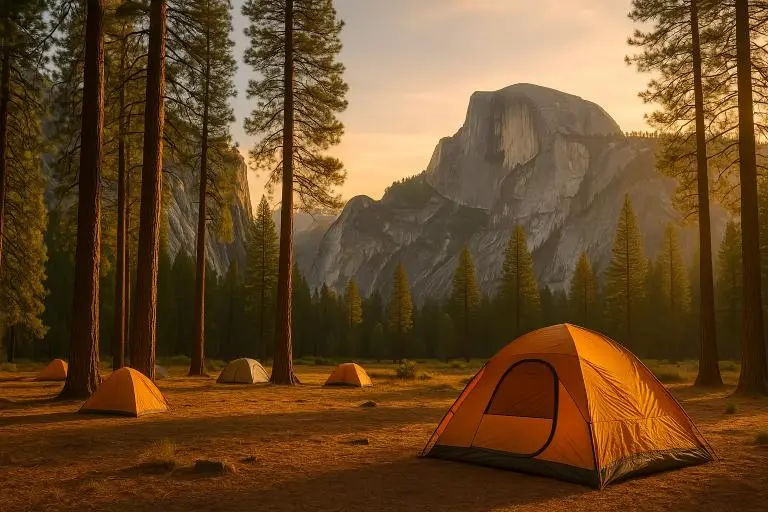
Why Try Winter Camping?
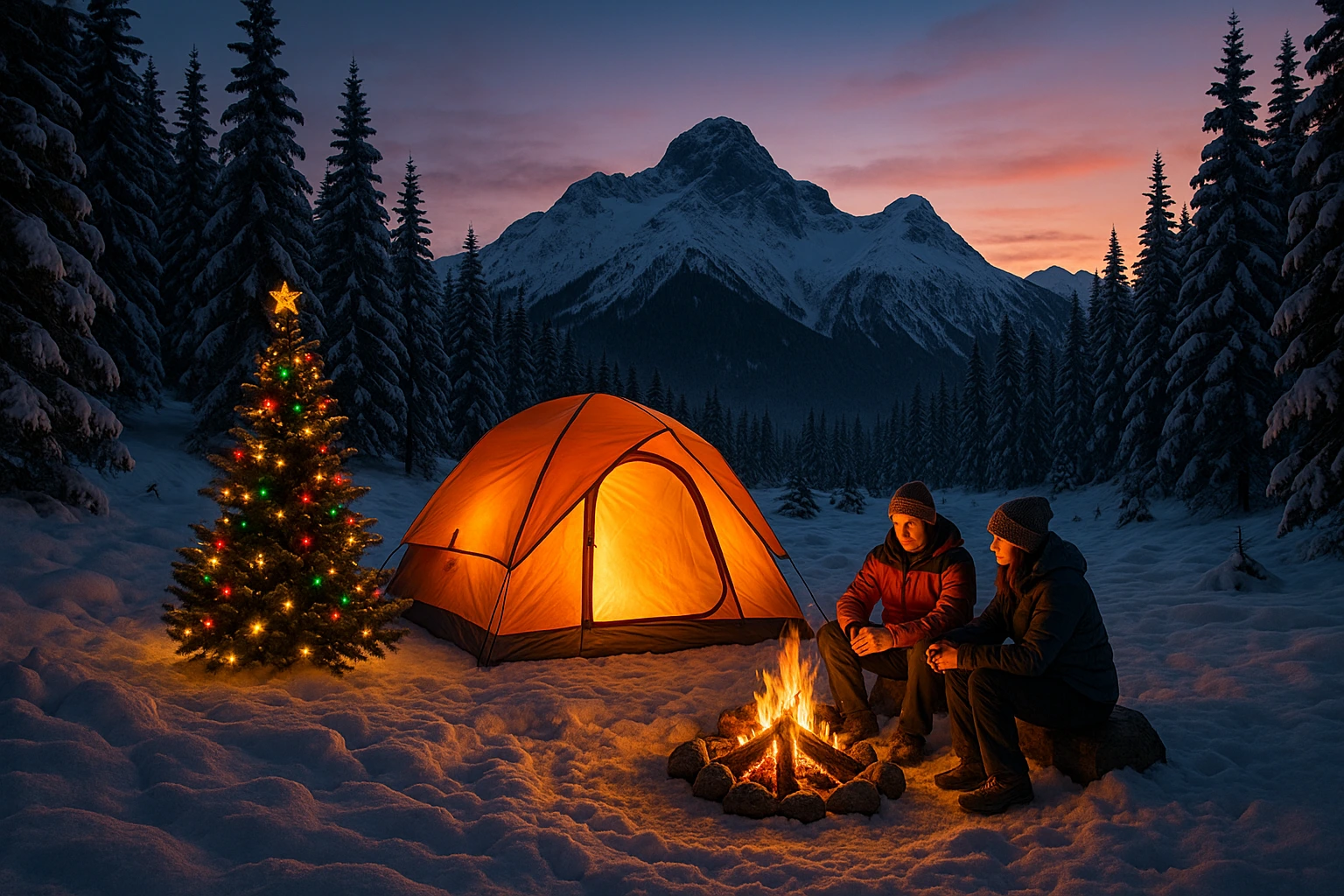
Winter camping isn’t just for hardcore survivalists. It’s for anyone who wants to experience the outdoors in a whole new way. Trails are quieter, campsites less crowded, and the scenery transforms into a winter wonderland. Plus, you’ll develop confidence knowing you can handle the elements in every season. The key lies in preparation and knowing which gear and strategies will keep you safe.
Hammocks in Winter: Cozy or Crazy?
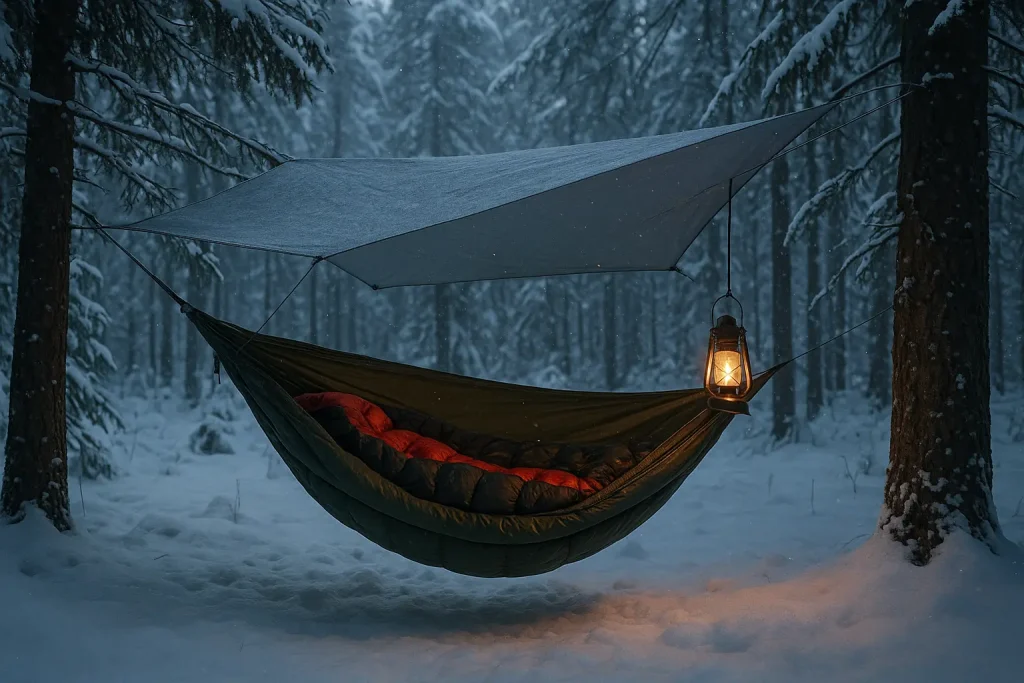
At first thought, hammocks might not sound like a great idea when temperatures drop—but winter hammock camping has gained popularity. With the right setup, hammocks can actually keep you warm and comfortable while suspending you above cold, snowy ground.
Essential hammock gear for winter camping:
- Underquilt or sleeping pad: Insulation beneath you is non-negotiable. Cold air flows under the hammock, pulling away body heat. An insulated underquilt or foam pad solves this problem.
- Top quilt or sleeping bag: Just like sleeping in a tent, you’ll need a warm top layer. Down-filled top quilts are especially popular for lightweight insulation.
- Tarp or rain fly: Protect yourself from snow and wind by setting up a tarp above your hammock.
Hammocks shine when the ground is frozen, sloped, or rocky. Instead of struggling to clear snow for a tent site, you can string up your bed between two sturdy trees. The trick is layering properly and not skimping on insulation.
Winter Tents: Your Mobile Cabin
For many campers, a tent feels like a natural winter shelter. Winter-specific tents (often called 4-season tents) are designed to handle snow loads, high winds, and frigid temperatures.
Features to look for in a winter tent:
- Sturdy poles and structure: Dome or geodesic shapes resist strong winds and heavy snow.
- Low-profile design: Helps shed wind while trapping warmth.
- Snow flaps or extended vestibules: Keep blowing snow outside your sleeping area.
When setting up a tent in winter, location is everything. Avoid low-lying areas where cold air settles, and steer clear of avalanche-prone slopes. Stamp down snow before pitching your tent to create a stable base. For added warmth, line the floor with a foam pad or reflective blanket.
Staying Warm with Portable Heaters
Sometimes, even the best sleeping bag needs backup. Portable heaters can make winter camping far more comfortable—especially when temperatures dip well below freezing.
Types of heaters for camping:
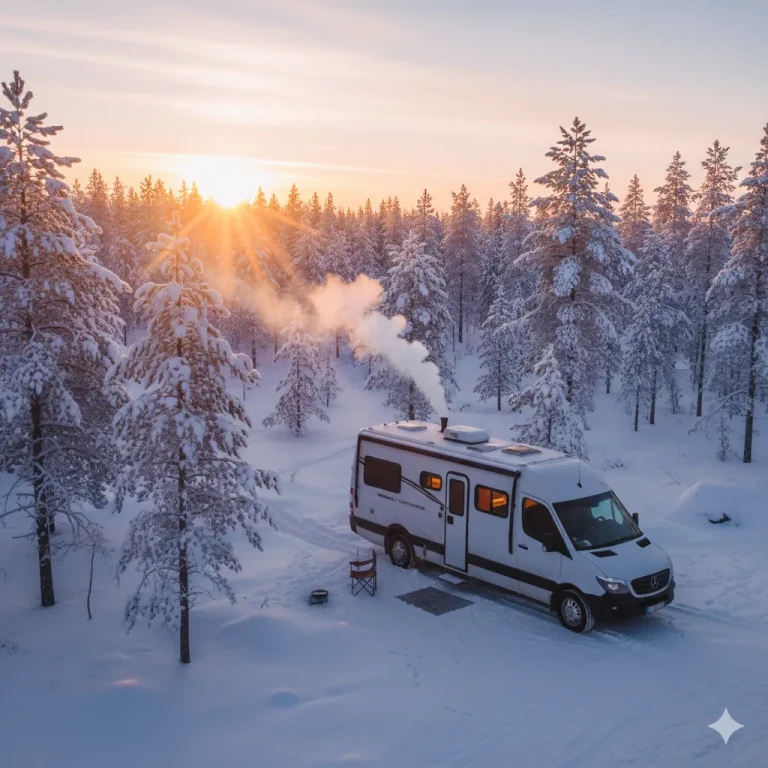
- Propane heaters: Popular for RVs and larger tents, these provide strong heat but require proper ventilation.
- Catalytic heaters: Safer and quieter, these run on propane but don’t use open flames.
- Battery-powered or electric heaters: Usually less powerful but safer in enclosed spaces, ideal if you have a portable power station.
Safety first: Never use heaters in fully enclosed spaces without ventilation. Carbon monoxide is a serious risk. Always follow the manufacturer’s instructions, and position heaters away from sleeping bags or flammable materials.
Layering Like a Pro
No Winter Camping Guide would be complete without talking clothing. The way you dress makes all the difference between misery and magic.
Layering system:
- Base layer: Wicks sweat away from your skin. Merino wool or synthetic fabrics work best.
- Mid layer: Provides insulation. Think fleece, puffy jackets, or wool sweaters.
- Outer layer: Shields against wind and snow. Waterproof, breathable shells are ideal.
Don’t forget accessories like insulated gloves, wool socks, and a thermal hat. Heat escapes quickly from your head and extremities.
Smart Food and Hydration
Eating and drinking properly keeps your body fueled for warmth. Winter camping burns more calories as your body works to stay warm.
- High-calorie meals: Think pasta, rice dishes, and hearty stews. A hot campfire chili can feel like heaven after a cold hike.
- Snacks on hand: Trail mix, energy bars, and jerky keep your energy up.
- Stay hydrated: Cold air dehydrates you faster than you think. Melt snow for water, but always boil or filter it.
Hot drinks like tea, cocoa, or broth not only hydrate you but also lift your spirits in the cold.
Campfire Comforts in the Cold
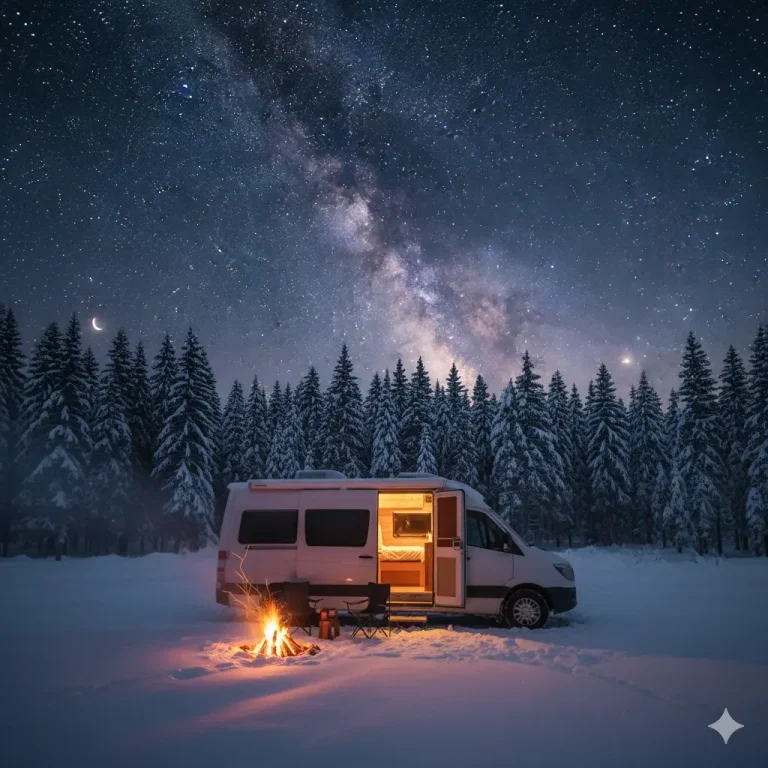
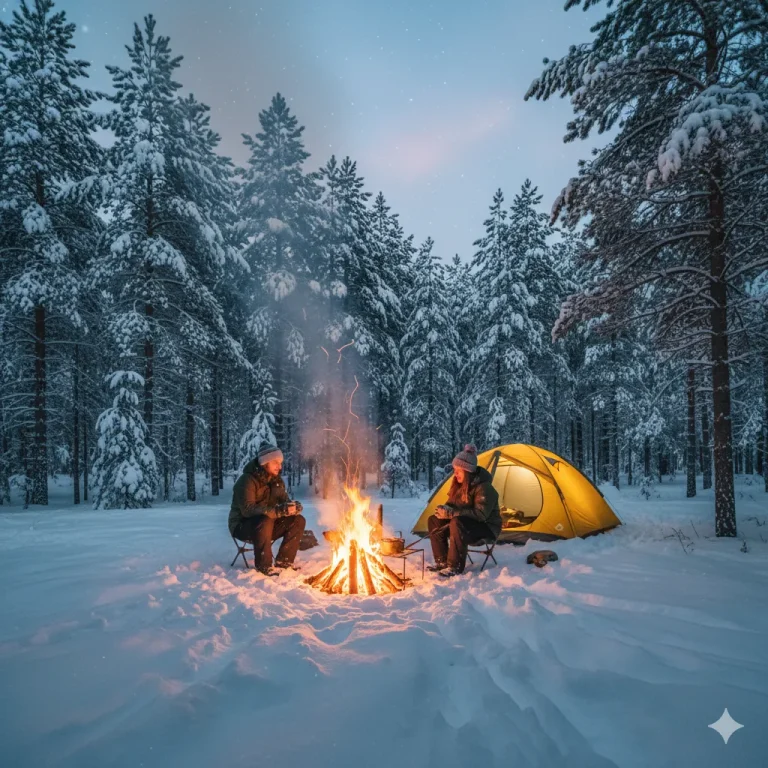
Nothing beats gathering around a campfire on a snowy night. Fire provides light, warmth, and a sense of calm. Just be mindful of Leave No Trace principles.
Tips for winter campfires:
- Clear snow down to the soil or pack it tightly before starting a fire.
- Use dry, seasoned wood when possible. Wet or frozen wood is tough to ignite.
- Keep your fire small but steady for easier management and less wood consumption.
If campfires aren’t allowed, portable stoves are a reliable alternative for both heat and cooking.
Safety and Survival Essentials
Cold-weather camping brings unique challenges. Preparing for emergencies can save your life.
- Navigation tools: Don’t rely solely on your phone. Carry a map and compass.
- First aid kit: Include frostbite and hypothermia supplies.
- Emergency shelter: A bivy sack or space blanket can be a lifesaver.
- Communication: Satellite messengers or radios are wise backups in remote areas.
Always tell someone your plan and expected return time. Conditions can shift quickly in winter.
Final Thoughts: Embrace the Chill
Winter camping can sound intimidating, but with the right mindset and gear—whether hammocks, tents, or heaters—you can create some of your most memorable outdoor adventures. The stillness of snowy nights, the glow of a fire reflecting off frosted trees, and the pride of thriving in the cold all combine to make it worth the effort.
So pack your layers, prepare your gear, and get ready to see the outdoors in a whole new light. This Winter Camping Guide is your invitation to trade the noise of summer crowds for the peaceful beauty of winter’s embrace.