Can Propane Freeze? Guide to Warm Winter Camping (6 Things to Know)
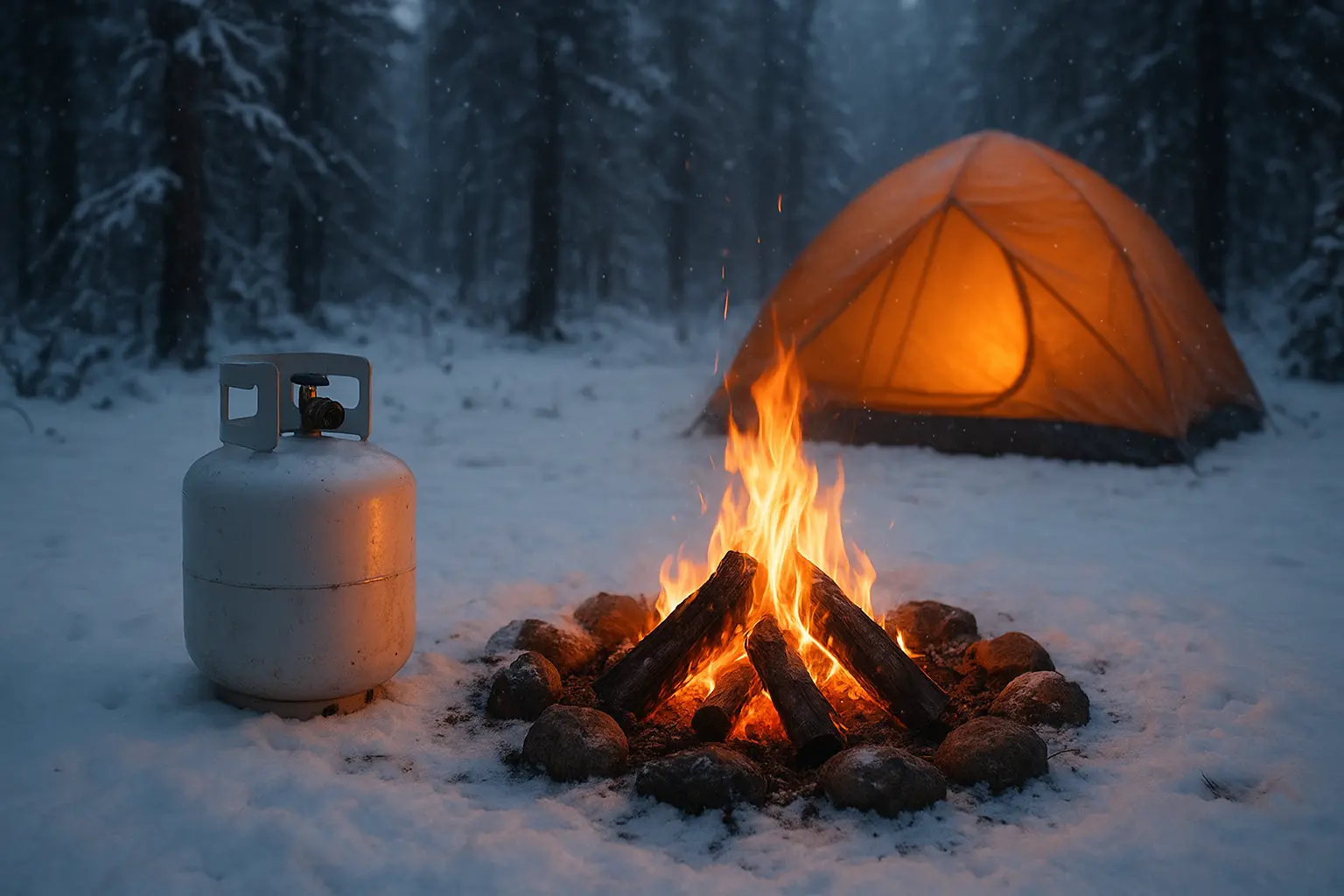
If you’ve ever gone camping in freezing weather and noticed your propane heater sputtering or your stove struggling to light, you’ve probably wondered: Can propane freeze?
Propane is one of the most reliable fuels for campers, RVers, and outdoor enthusiasts — it powers heaters, stoves, lanterns, and even refrigerators. But when temperatures drop below zero, it’s natural to worry about whether your propane will still work or if the cold can stop it in its tracks.
In this guide, we’ll unpack everything you need to know about propane in cold weather, how to keep your gear running smoothly, and six key tips to ensure warm, safe winter camping.
Can Propane Freeze in Cold Temperatures?
The good news: propane doesn’t actually freeze under normal winter conditions.
Propane’s freezing point is -306°F (-188°C) — far colder than any natural temperature you’ll ever experience on Earth. So, technically, propane itself will never freeze solid, no matter how cold your campsite gets.
However, propane can stop working efficiently in extreme cold — not because it freezes, but because of how the gas behaves at low temperatures.
Why Propane Sometimes Acts “Frozen
Propane is stored as a liquid under pressure inside your tank. When you open the valve, it vaporizes and turns into gas — the form that fuels your heater or stove.
As temperatures drop, pressure inside the tank decreases. When it gets too cold (around -44°F or lower), the pressure may become too low to push gas out of the tank, even though there’s plenty of liquid propane left inside.
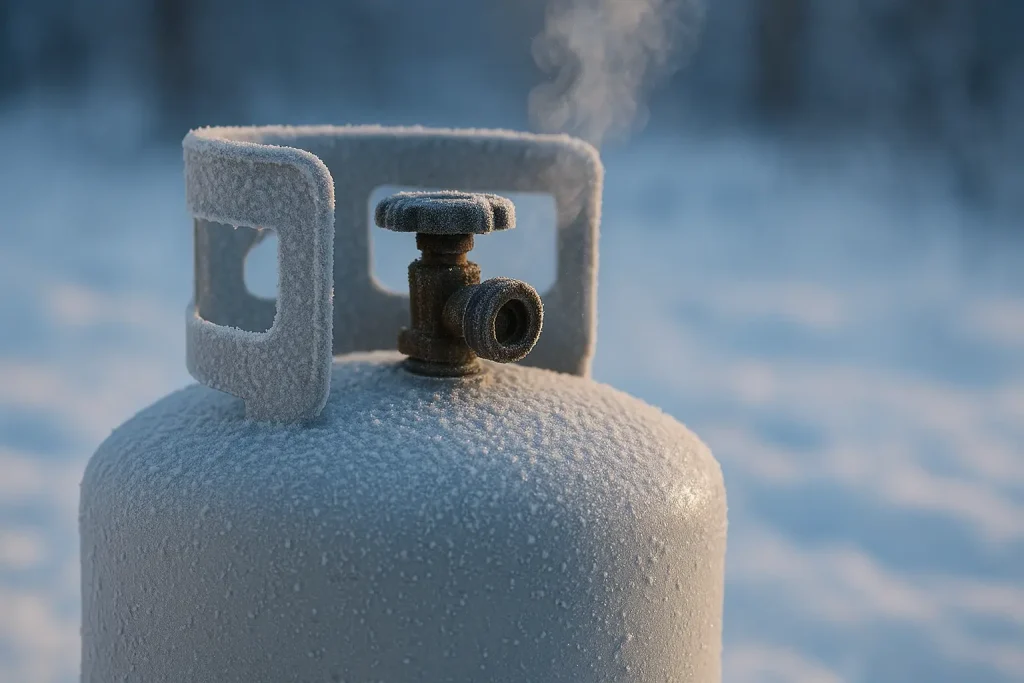
This can make it seem like your propane has “frozen,” when in reality, it’s just struggling to vaporize properly due to low pressure.
6 Things to Know About Using Propane in Winter
1. Keep Propane Tanks from Getting Too Cold
While propane won’t freeze, the pressure inside the tank can drop so much that your heater or stove won’t ignite.
To avoid this:
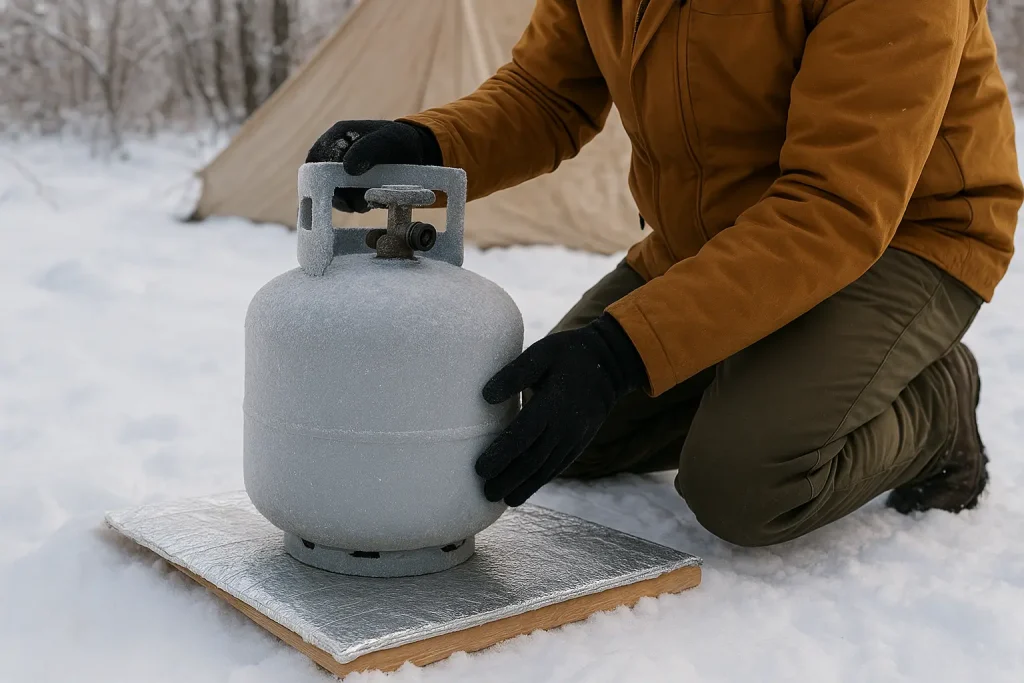
- Store tanks off the frozen ground — use a wooden board or insulated pad.
- Shield tanks from wind, which accelerates cooling.
- Keep them in a well-ventilated but sheltered area like under your RV or canopy.
If it’s extremely cold, gently warming the tank (not with direct flame) using a propane blanket or insulation sleeve can help maintain pressure.
2. Use a Larger Tank for Cold Weather
Smaller tanks cool down faster and lose pressure more easily. A larger tank maintains internal pressure better because it contains more thermal mass.
For extended winter camping, upgrade from a 1-lb disposable cylinder to a 5-lb or 20-lb refillable propane tank. This not only improves efficiency but also reduces the frequency of refills.
3. Keep Your Regulator Warm
Your propane regulator — the small device that controls gas flow from the tank — is especially vulnerable to freezing condensation. Moisture inside the regulator can ice up and block gas flow.
To prevent this:
- Keep the regulator off the ground and away from snow buildup.
- Wrap it lightly with an insulating cover (never airtight).
- Avoid using water or steam to thaw it — instead, bring it into a warmer environment if necessary.
4. Use Winter-Grade Propane or Butane Blends
If you’re using a small portable stove or lantern, check what kind of gas it uses. Butane and isobutane mixtures often perform poorly in the cold because they vaporize at higher temperatures than propane.
Stick with 100% propane canisters for winter use. They’re designed to stay effective even when temperatures plummet.
For extreme cold trips, many campers prefer propane-isobutane blends rated for sub-zero conditions — a good balance of performance and portability.
5. Monitor Tank Levels Regularly
Cold temperatures make it harder to gauge how much propane is left in your tank because pressure readings can drop even when the tank is still half full.
To keep track:
- Use a tank gauge or magnetic level indicator.
- Warm the tank slightly before checking for more accurate readings.
- Always bring a backup propane source on longer trips.
6. Safety Always Comes First
Even though propane is safe when used correctly, cold weather can increase certain risks:
- Frozen hoses or connections can crack and cause leaks.
- Condensation buildup may lead to regulator blockages.
- Improper ventilation can cause carbon monoxide buildup when heating enclosed spaces.
Before lighting any heater or stove, check connections for leaks using a soapy water test — bubbles indicate escaping gas. Always ensure proper airflow inside your tent or camper.
Bonus: Tips for Keeping Your Propane System Efficient
- Pre-warm your equipment: Bring small canisters inside your vehicle before use.
- Store tanks upright: This ensures vapor exits correctly through the valve.
- Don’t overfill tanks: Propane needs expansion space, especially in fluctuating temperatures.
- Check seals and O-rings: Cold can make rubber brittle — replace worn parts before winter.
These small habits can make a huge difference in both performance and safety.
How to Stay Warm While Camping in Winter
Propane heat is great, but it’s only part of the equation for staying cozy in freezing temps. Combine it with:
- Four-season sleeping bags rated for your climate.
- Insulated sleeping pads to block ground chill.
- Layered clothing that wicks moisture.
- Thermal blankets or reflective liners inside your tent.
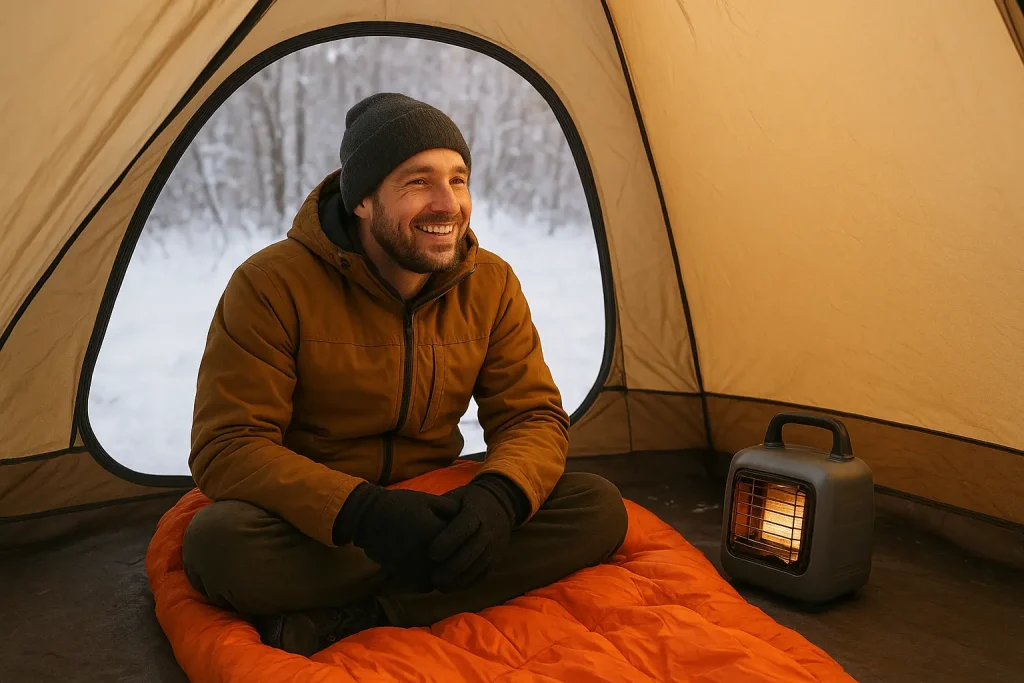
And of course, a safe, efficient propane heater (with an oxygen sensor and auto shut-off) can turn your cold camp into a winter retreat.
Final Thoughts: Propane Won’t Freeze, But You Might!
So, can propane freeze? No — not unless you’re camping on another planet. But low temperatures can affect propane pressure and performance, making it seem frozen.
By understanding how propane behaves in the cold and following these six key tips — from insulation and ventilation to choosing the right tank — you’ll ensure your winter camping setup runs safely and efficiently.
With a bit of prep, propane remains one of the most dependable fuels for your cold-weather adventures. Stay warm, stay safe, and enjoy the beauty of winter camping.