Safe Ice Thickness Guide: The Essential Chart for 7 Winter Activities
When lakes and ponds freeze over, the frozen surface can look like an open invitation for adventure—whether that’s ice fishing, skating, walking, or even driving your car or snowmobile. But not all ice is safe, and appearances can be dangerously deceiving.
That’s why every winter enthusiast needs a safe ice thickness guide—a simple, science-backed chart that shows how much ice is required to support various activities safely.
In this complete guide, you’ll learn how to measure ice thickness, how much ice is safe for different uses, and essential safety precautions for winter fun.
1. Why Ice Thickness Matters for Winter Safety
Each year, accidents happen because people underestimate how fragile ice can be. Ice doesn’t freeze evenly—wind, current, snow cover, and temperature fluctuations can make one area safe while another, just feet away, is weak.
Understanding safe ice thickness can literally save lives. Ice strength depends on:
- Temperature patterns (consistent cold makes stronger ice)
- Snow cover (insulates and slows freezing)
- Water currents or springs (weaken ice from below)
- Objects on the surface (absorb sunlight and melt surrounding ice)
Knowing what thickness is safe for each activity helps prevent falls, rescues, and equipment loss.
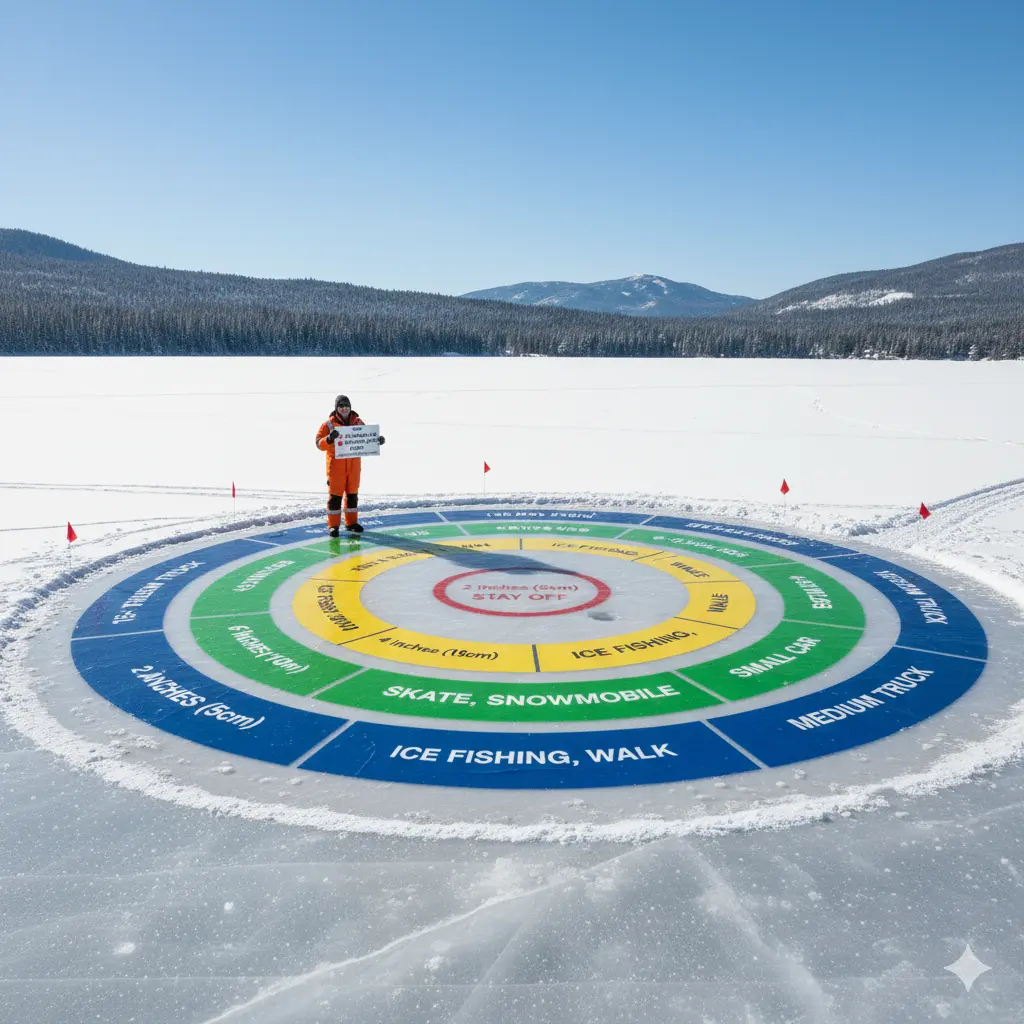
2. Safe Ice Thickness Chart: 7 Common Winter Activities
Below is a general safety chart used by experts and outdoor safety organizations like the Minnesota Department of Natural Resources. These values apply to clear, solid blue ice—the strongest type. White or slushy ice is weaker and requires double the thickness.
| Ice Thickness (inches) | Activity | Safety Level |
|---|---|---|
| 2 inches or less | Stay off | Unsafe |
| 4 inches | Walking, ice fishing | Generally safe |
| 5–7 inches | Snowmobile or ATV | Safe for light vehicles |
| 8–12 inches | Car or small pickup | Caution needed |
| 12–15 inches | Medium truck | Safe under ideal conditions |
| 16–20 inches | Heavy truck | Only in controlled environments |
| 20+ inches | Ice roads or festivals | Exceptionally strong ice |
Important: These are guidelines for clear, solid ice. Always check in multiple spots and avoid ice near moving water or bridges.
3. How to Measure Ice Thickness Safely
Before you step onto the ice, you need to measure its thickness properly. The safest method is to start near the shore and gradually test as you move outward.
Recommended Tools:
- Ice auger – Drills a clean hole through the ice
- Cordless drill – Lightweight alternative for testing
- Ice chisel (spud bar) – Great for early-season testing
- Tape measure or stick – For accurate depth reading
Steps to Measure Ice Thickness:
- Drill or chisel a hole straight down through the ice.
- Insert a measuring tape until it hits water.
- Mark the point where the ice surface meets the tape.
- Pull it out and note the measurement.
Repeat this every few feet—ice thickness can change dramatically in short distances.
4. Understanding Ice Types and Strength
Not all ice is created equal. Even if the thickness looks sufficient, ice quality determines how much weight it can support.
Types of Ice:
- Clear (Blue) Ice:
Strongest form of ice, created by steady freezing temperatures. Safe for most activities when thick enough. - White (Opaque) Ice:
Contains air bubbles or snow. Weaker and only half as strong as clear ice of the same thickness. - Slushy Ice:
Formed by melting and refreezing. Extremely weak—unsafe for any load. - Layered or Honeycombed Ice:
Ice that has thawed and refrozen multiple times. Brittle and unpredictable.
Rule of thumb: If you see cracks, slush, or running water nearby—avoid the area entirely.

5. Ice Safety for 7 Popular Winter Activities
Each winter activity requires a specific minimum ice thickness for safe participation. Here’s what you need to know:
1. Walking and Ice Fishing (4 inches minimum)
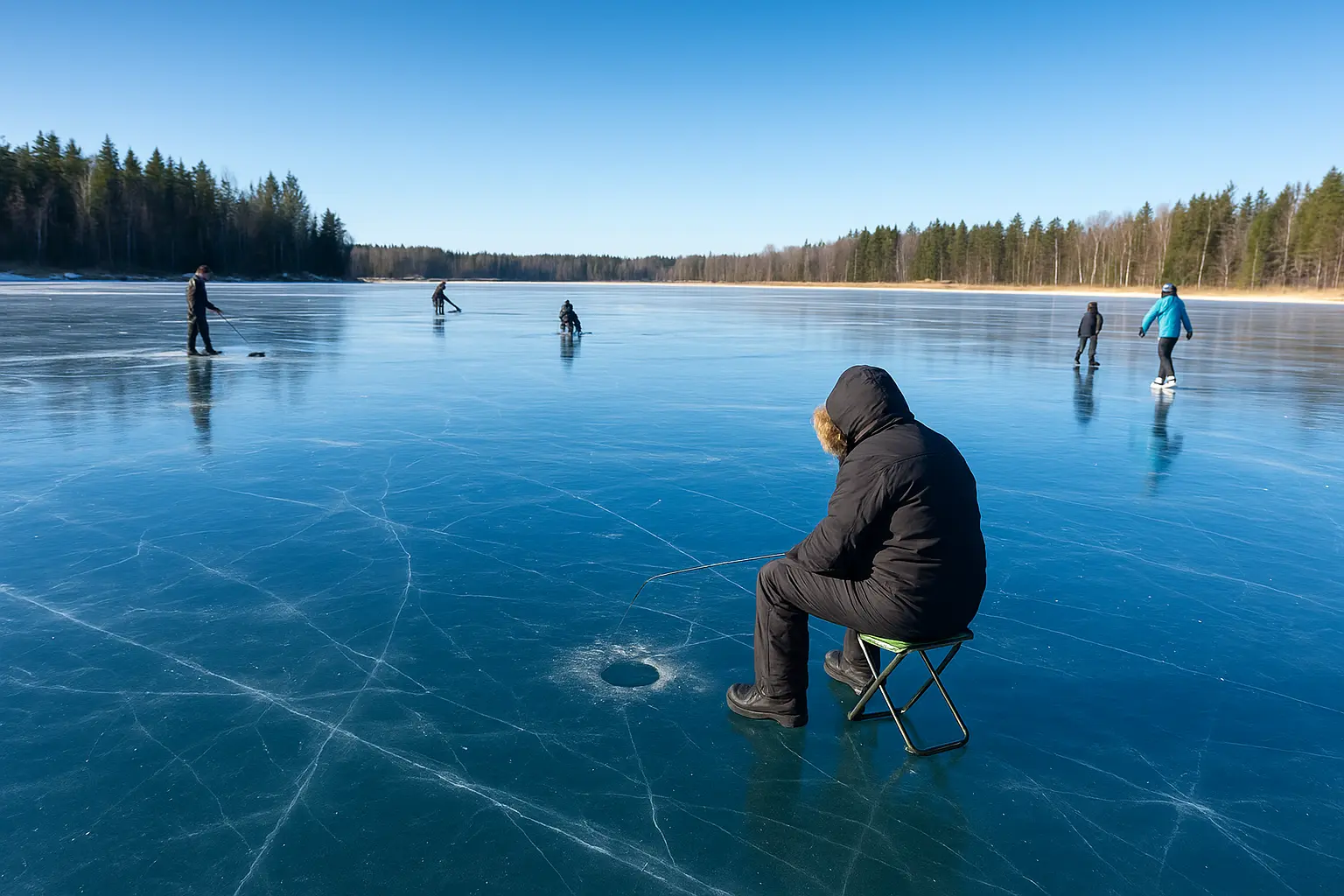
Perfect for individuals or small groups. Always stay spaced apart to reduce pressure on one area.
Tip: Drill a hole and measure ice before setting up a fishing shelter.
2. Skating (4–5 inches minimum)
Skating is safe when ice is smooth and consistent. Avoid shaded or snow-covered areas where thickness varies.
Tip: Check near the center before skating in groups—edges may freeze faster but can weaken under pressure.
3. Snowmobiling and ATVs (5–7 inches minimum)
These vehicles add more weight and vibration, requiring thicker ice.
Tip: Follow marked trails and avoid slushy patches. Ice can be weaker near inlets or streams.
4. Small Cars and Pickups (8–12 inches minimum)
Driving on ice is risky. If absolutely necessary, ensure consistent freezing conditions and slow speeds.
Tip: Keep windows down and seat belts unfastened—escape quickly if the ice cracks.
5. Medium Trucks (12–15 inches minimum)
Safe only for heavy-duty ice roads or maintenance operations.
Tip: Never park vehicles close together on ice—it increases localized pressure.
6. Ice Roads or Events (16–20+ inches minimum)
Used in remote northern regions for freight or winter festivals. These require professional ice monitoring and strict regulations.
7. Group Activities or Ice Shanties (8+ inches minimum)
If several people or heavy equipment are involved, measure ice in multiple spots and spread weight evenly.
6. Warning Signs of Unsafe Ice
Before venturing out, always look for visible warning signs. Unsafe ice often shows:
- Cracks or open water nearby
- Wet, slushy areas
- Discoloration (gray, dark, or white patches)
- Bubbles under the surface
- Strange noises (creaking or cracking)
If you see any of these signs, retreat immediately and check safer zones near shore.
7. What to Do If You Fall Through the Ice
Despite precautions, accidents can still happen. Knowing what to do in that terrifying moment can save your life.
If You Fall In:
- Stay calm—panic causes faster heat loss.
- Turn toward the direction you came from.
- Use ice picks or car keys to grip the surface.
- Kick your legs to propel yourself out horizontally.
- Once out, roll away from the hole before standing up.
- Get to a warm location and replace wet clothes immediately.
If Someone Else Falls In:
- Call for help first.
- Use a long object like a branch or rope to reach them.
- Never approach directly on weak ice.
8. Smart Winter Safety Tips
- Test ice regularly with an auger or chisel.
- Avoid alcohol—impairs judgment and balance.
- Carry a flotation jacket or throw rope.
- Check local ice reports before heading out.
- Never assume ice is safe just because it looks thick.
Conclusion: Knowledge Keeps You Safe on the Ice
Whether you’re planning to fish, skate, or drive across a frozen lake, knowing the safe ice thickness is essential. Ice safety isn’t just about thickness—it’s about awareness, preparation, and common sense.
Always measure ice in multiple places, learn to recognize good ice, and follow the safety chart before venturing out. With the right knowledge and respect for nature’s limits, you can enjoy a safe and thrilling winter season outdoors.