Best Time of Day to Ice Fish? Expert Guide to 6 Species & 3 Prime Times
Ice fishing is one of winter’s most rewarding outdoor pursuits, but timing is everything. Whether you’re targeting walleye at dawn or perch at midday, understanding the best time of day to ice fish can mean the difference between an empty line and a full bucket.
In this expert guide, we’ll explore the three most productive times of day, explain how fish behavior changes with light and temperature, and break down six common species with tips tailored to each one.
Understanding How Time of Day Affects Ice Fishing
Fish behavior beneath the ice isn’t random — it’s closely tied to light penetration, oxygen levels, and temperature changes. During winter, fish move less to conserve energy, making it essential to know when they feed most actively.
Here’s a quick overview:
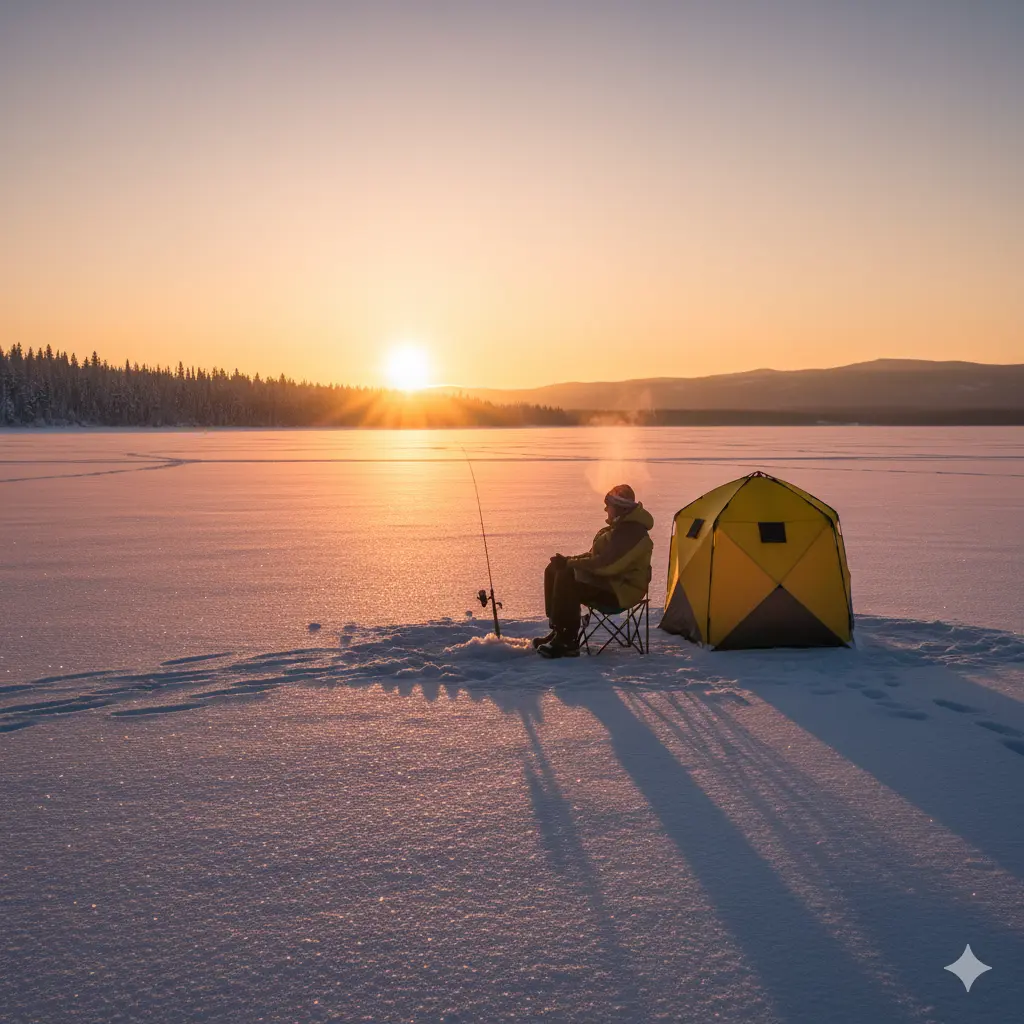
- Early Morning (6–9 AM): Ideal for species like walleye, trout, and northern pike. The low light triggers predatory instincts.
- Midday (11 AM–2 PM): Best for panfish like bluegill, perch, and crappie, which become more active when light penetrates deeper.
- Late Afternoon (3–6 PM): A second peak feeding time for larger predators before temperatures drop overnight.
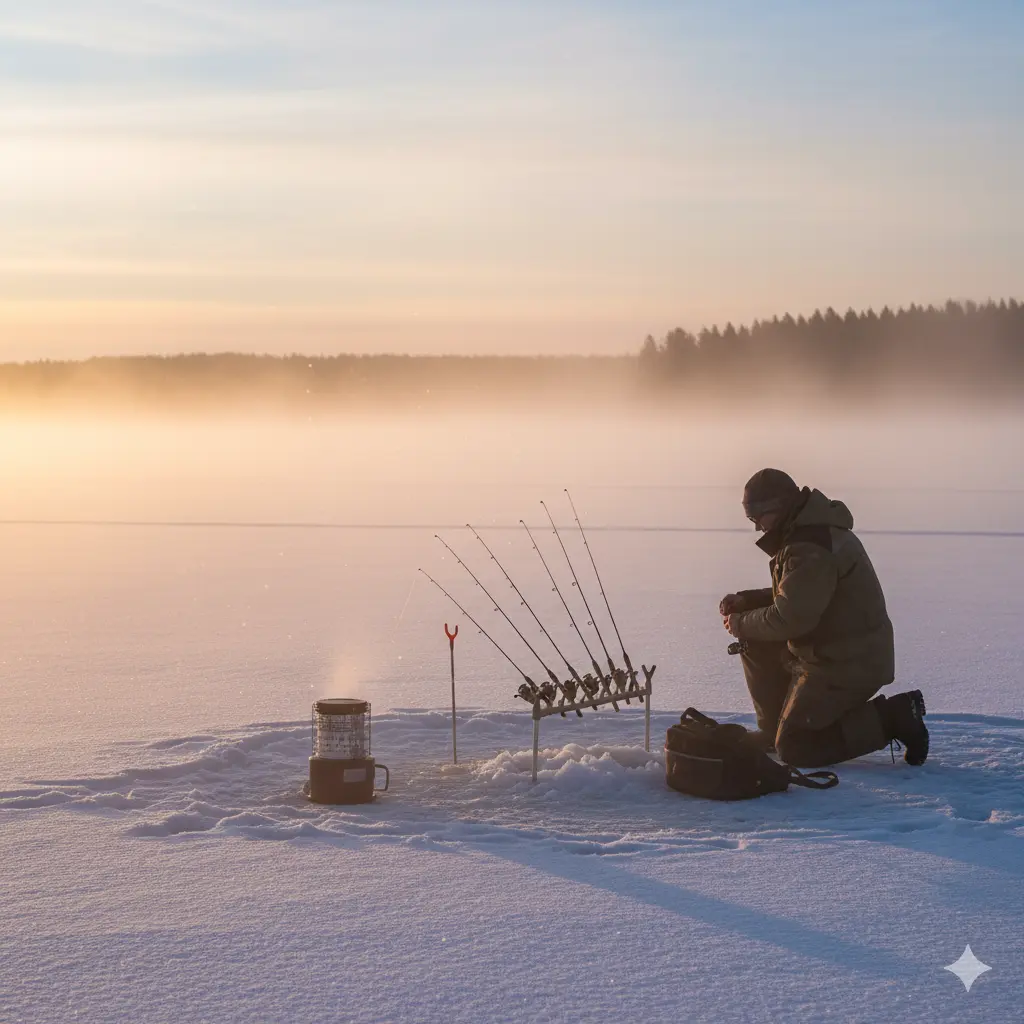
1. Early Morning: The Golden Window for Aggressive Feeders
The first few hours after sunrise are legendary among ice anglers. Oxygen levels rise as photosynthesis resumes, and many predatory fish begin to hunt.
Best species to target:
- Walleye: Known for excellent low-light vision, they strike aggressively at dawn.
- Trout: Both rainbow and lake trout patrol shallow edges early in the day.
- Northern Pike: Use tip-ups near weed lines or drop-offs for explosive strikes.
Tips:
- Use brightly colored lures or live bait like minnows.
- Focus on shallower areas that warm up quickly in sunlight.
2. Midday: Consistent Action for Panfish and Crappie
When the sun climbs higher, smaller fish species become more active. The light penetrates the ice, warming the water just enough to stimulate feeding.
Best species to target:
- Perch: Travel in schools — once you find one, you’ll likely find many.
- Crappie: Excellent vision and preference for moderate light make midday ideal.
- Bluegill: Often found in 10–15 feet of water near submerged vegetation.
Tips:
- Downsize your jigs; subtle presentations work best.
- Look for underwater structure using a fish finder.
3. Late Afternoon: The Evening Surge Before Nightfall
As the light fades, predatory species like walleye and pike return to feed aggressively before dark. This “magic hour” often delivers the most consistent bite window of the day.
Best species to target:
- Walleye: Return to shallows in the evening after midday rest.
- Northern Pike: Active again as smaller fish move closer to cover.
- Trout: Often patrol near drop-offs or rocky points before sunset.
Tips:
- Glow lures or natural baits work best as light diminishes.
- Stay quiet on the ice to avoid spooking fish in shallower waters.
4. Seasonal Variations: Early vs. Late Ice
Not all ice fishing seasons are equal. Fish activity changes dramatically from early winter to late February.
- Early Ice (December–January): Fish are highly active. Oxygen levels are high, and food sources are still abundant.
- Mid-Winter (January–February): Bite rates slow as oxygen levels drop; fish move to deeper water.
- Late Ice (February–March): Activity spikes again before thawing — an excellent time for big catches.
5. Weather and Barometric Pressure Effects
Weather plays a huge role in ice fishing success.
- Falling pressure before a storm increases feeding activity.
- High pressure and clear skies can make fish sluggish — use smaller lures and slow presentations.
- Overcast conditions often extend the morning and evening bite windows.
6. Depth and Location Adjustments by Species
Understanding where your target species feeds at specific times is just as important as knowing when.
| Species | Morning Depth | Midday Depth | Evening Depth |
|---|---|---|---|
| Walleye | 10–20 ft | 20–30 ft | 10–15 ft |
| Perch | 15–25 ft | 20–30 ft | 10–20 ft |
| Trout | 5–15 ft | 20–35 ft | 10–20 ft |
| Crappie | 10–20 ft | 15–25 ft | 10–15 ft |
| Pike | 5–15 ft | 10–20 ft | 5–10 ft |
7. Lighting and Lure Selection for Different Times of Day
Matching lure color to light conditions can make or break your trip:
- Low Light (Dawn/Dusk): Glow or fluorescent lures are best.
- Bright Midday Sun: Use natural tones — silver, gold, or perch patterns.
- Cloudy Days: Opt for chartreuse or white for better visibility.
8. Safety Reminder: Ice Thickness and Preparation
Even the best fishing spot isn’t worth the risk of unsafe ice.
- Always check that ice is at least 4 inches thick for walking, 6–8 inches for snowmobiles, and 12+ inches for vehicles.
- Carry ice picks, wear a float suit, and fish with a buddy whenever possible.
Conclusion
Finding the best time of day to ice fish comes down to understanding fish behavior, adapting to weather, and knowing the preferences of each species.
Whether you’re chasing walleye at sunrise or perch at noon, every successful trip starts with timing, patience, and preparation.
So, grab your auger, check the ice, and get ready for your next great catch — because the perfect window might be just a sunrise away.